- tomarrakechdeserttours@gmail.com
- +212702431727
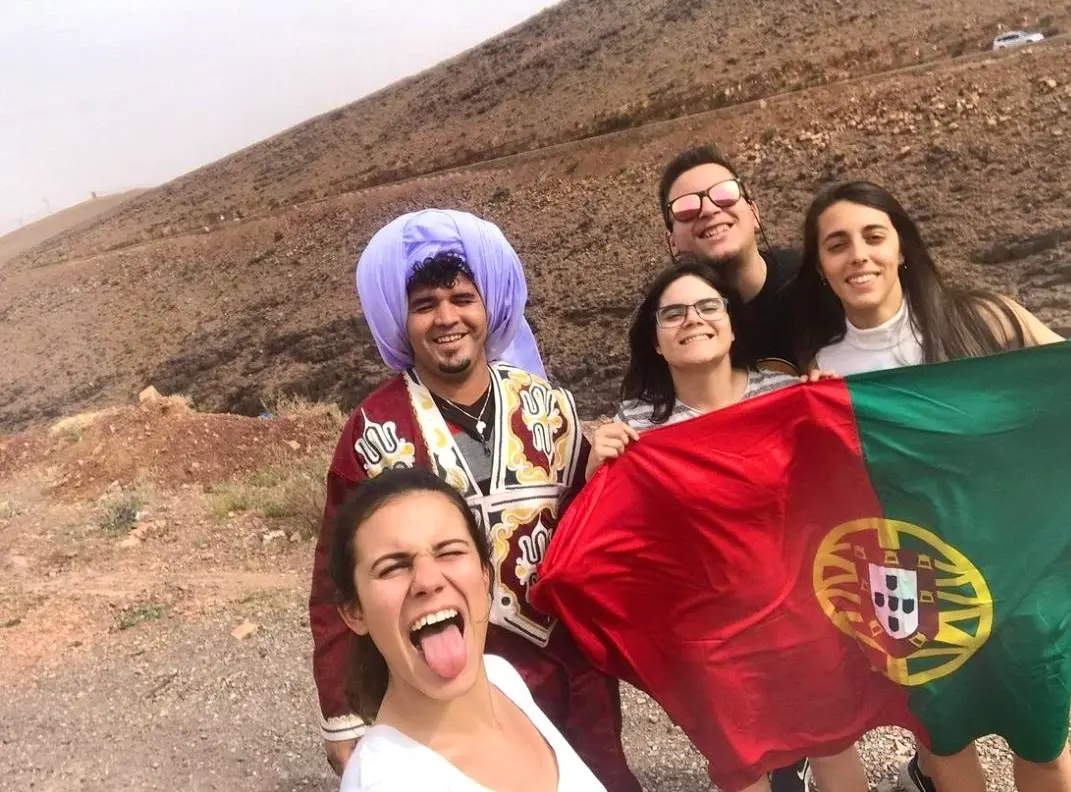
Traveling from the historic streets of Lisbon or the sunny beaches of the Algarve to the magical landscapes of Morocco is an unforgettable adventure. Because these two beautiful destinations are located so close to each other, planning a journey across the border is both easy and highly rewarding. Whether you want a quick weekend getaway or a scenic overland road trip, knowing the best way to travel from Portugal to Morocco makes all the difference for your vacation.
Choosing to travel from Portugal to Morocco is one of the most exciting overland or short-flight journeys you can make in the Mediterranean region. While Portugal charms travelers with its Atlantic coastline, historic tramways, and melancholic Fado music, crossing over to Morocco completely transforms your travel experience. In just a matter of hours, you move from European baroque architecture to ancient, winding Islamic Medinas.
The closeness of these two nations makes it incredibly easy to combine them into a single, diverse vacation. Leaving the peaceful vibes of the Portuguese Algarve or the historic streets of Lisbon to step into the vibrant, spice-scented souks of Morocco offers an unforgettable sensory contrast. It is the perfect way to experience how two cultures, separated by only a narrow strip of water, have influenced each other through centuries of shared history.
When planning how to travel from Portugal to Morocco, flying is undoubtedly the fastest and most convenient method. The two countries are geographical neighbors, meaning you can board a plane in Portugal and land on Moroccan soil in less than two hours. This option is ideal for travelers who want to maximize their vacation time and avoid the longer overland routes.
The most reliable connections depart from Portugal’s two largest cities: Lisbon and Porto. If you are flying out of Lisbon Humberto Delgado Airport (LIS), you can catch frequent daily flights directly to Marrakech or Casablanca. Major national carriers like TAP Air Portugal and Royal Air Maroc offer regular, professional services on these routes.
For budget-conscious travelers looking to travel from Portugal to Morocco, low-cost airlines like Ryanair and easyJet operate highly affordable direct flights from Lisbon, Porto, and even seasonal routes from Faro in the Algarve region straight to Marrakech Menara Airport (RAK).
Lisbon to Marrakech / Casablanca: Non-stop flights take roughly 1 hour and 35 minutes.
Porto to Marrakech: Direct flights take approximately 1 hour and 50 minutes.
Choosing your arrival airport depends entirely on your travel plans. If you are looking to dive straight into historical medinas and prepare for a desert tour, landing in Marrakech is your best option. If you prefer a modern coastal entry point with easy train connections to the rest of the country, Casablanca is the perfect gateway.
For those who love the romance of the open road, figuring out how to travel from Portugal to Morocco by car and ferry is an incredible adventure. While there is no direct commercial car ferry running straight from Portuguese ports to Morocco, the overland journey through southern Spain is incredibly straightforward and exceptionally scenic.
The journey begins with an easy, high-quality highway drive from Portugal into Andalusia, Spain. If you are starting in the Algarve region (such as Faro), you can reach the Spanish border in less than an hour via the A22 highway. From Lisbon, a drive down south toward the Spanish ports takes roughly 4 to 5 hours.
The route takes you past beautiful Andalusian landscapes, white-washed villages, and olive groves, making the drive an integral part of your vacation experience.
Once you reach the southern coast of Spain, you have two primary ports to choose from to complete your travel from Portugal to Morocco:
Tarifa to Tangier Ville: This is the fastest and most convenient route. The high-speed ferry takes just 1 hour to cross the Strait of Gibraltar. Crucially, it drops you off directly at the Tangier Ville port, located right in the center of Tangier city.
Algeciras to Tangier Med: Located slightly east of Tarifa, Algeciras offers massive, frequent commercial ferries that run roughly every 30 to 60 minutes. The crossing takes about 1.5 hours and arrives at Tangier Med, a massive, modern port complex situated about 40 kilometers outside of Tangier city. This route is excellent if you intend to immediately hop onto the Moroccan highway network toward Chefchaouen or Fes.
If you are driving a rental car from Portugal, it is vital to check with your rental agency beforehand. Most Portuguese rental companies require specific insurance extensions (a Green Card with Morocco coverage validated) and written authorization to take the vehicle across continental borders into Africa.
Before you finalize your luggage and head to the airport or ferry terminal, ensuring your paperwork is in perfect order is key to a smooth journey. Crossing from Europe to North Africa involves an international border check, but the process for those making the travel from Portugal to Morocco is remarkably straightforward.
If you are holding a Portuguese passport (or any European Union passport), you do not need a visa to enter Morocco for tourist stays of up to 90 days.
However, the most critical requirement concerns your passport validity:
Your passport must be valid for at least 6 months from the date you step foot into Morocco.
Border control officers will stamp your passport upon arrival, so ensure you have at least one or two blank pages available.
Important Note: If you are a resident of Portugal but hold a passport from a country that requires a visa for Morocco, you can easily apply for a Moroccan e-Visa online through the official Acces Maroc portal before your trip.
When arriving via ferry or plane, you will occasionally be asked to fill out a simple entry form or state your accommodation details. Keeping your first night’s hotel or riad address printed or saved offline on your phone is one of our best practical tips for travel from Portugal to Morocco.
Furthermore, if you are crossing via the Spanish-Moroccan land borders with a vehicle, remember that you will need your driver’s license, the car’s registration documents, and a valid international insurance policy (often referred to as the Green Card) that explicitly covers Moroccan territory.
When mapping out how to travel from portugal to morocco, deciding on your final destination is the most exciting part of the planning process. Morocco offers a massive diversity of landscapes, from historical Imperial cities to coastal beach towns and sweeping desert dunes. Depending on what you love to experience, choosing the best way to travel from Portugal to Morocco often depends heavily on the specific regional gems you wish to uncover.
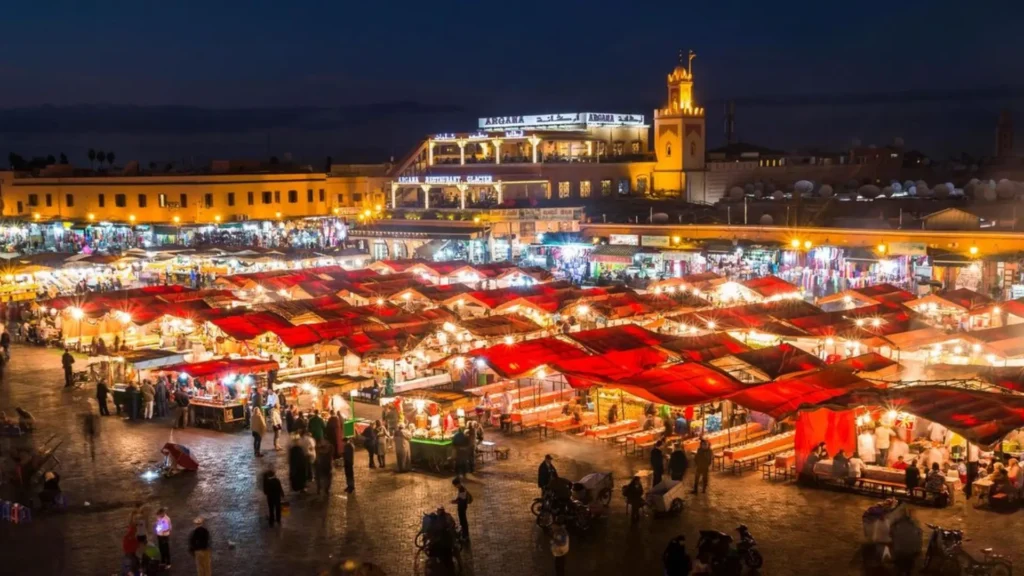
For most travelers taking a direct flight or planning a detailed tour, Marrakech is the ultimate starting point. Known as the “Red City,” it offers a thrilling mix of sensory experiences. You can spend your days exploring the majestic Bahia Palace, wandering the bustling alleyways of the Medina, and watching acrobats and musicians perform at the famous Jemaa el-Fnaa square as the sun sets.
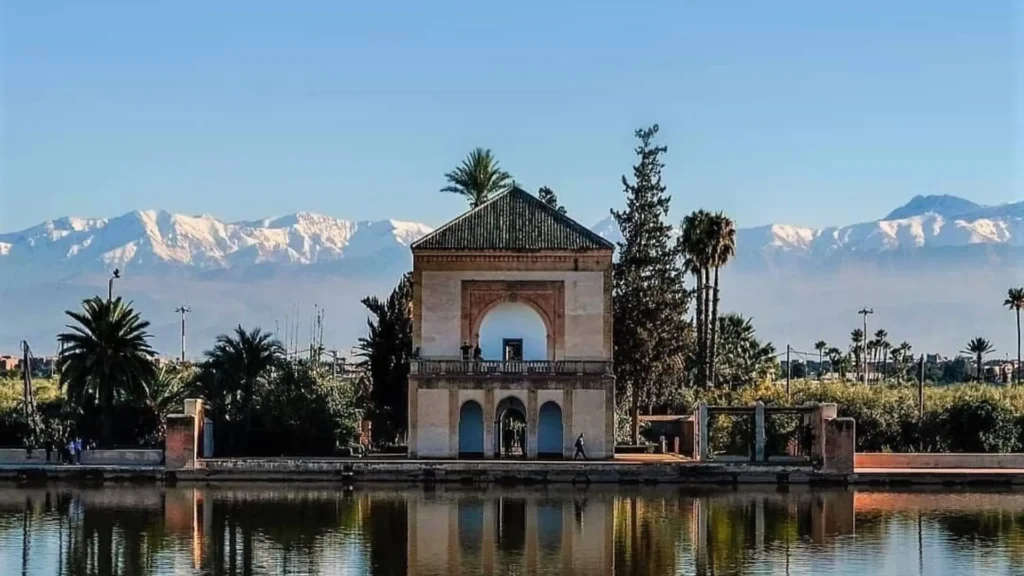
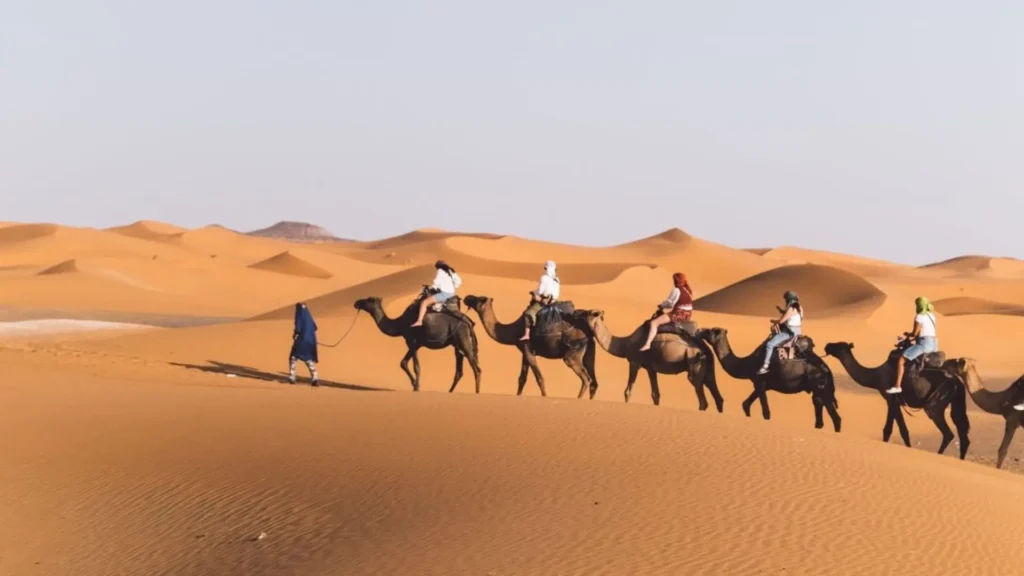
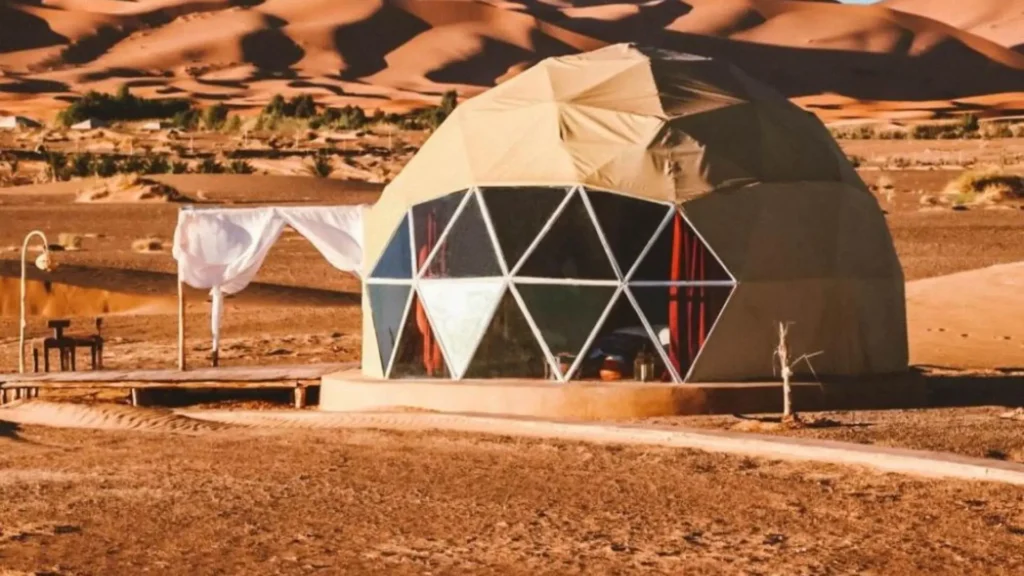
If you are making the travel from Portugal to morocco to experience something completely different from Europe’s landscapes, heading south to the Sahara Desert is an absolute must. The golden dunes of Erg Chebbi, near the village of Merzouga, offer the quintessential desert adventure. Here, you can leave the paved roads behind for a traditional camel trek, view incredible starry night skies away from light pollution, and spend the night in a luxury desert camp tucked away in the dunes.
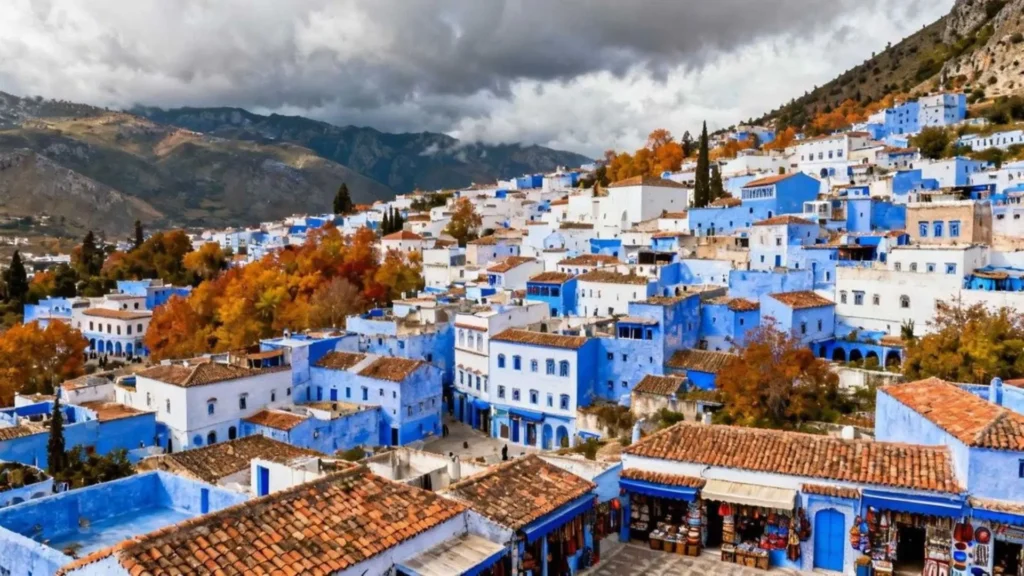
Chefchaouen: Nestled in the Rif Mountains, this town is world-famous for its striking, blue-washed buildings. It provides a peaceful, highly photogenic stop for travelers coming down via the northern ferry routes.
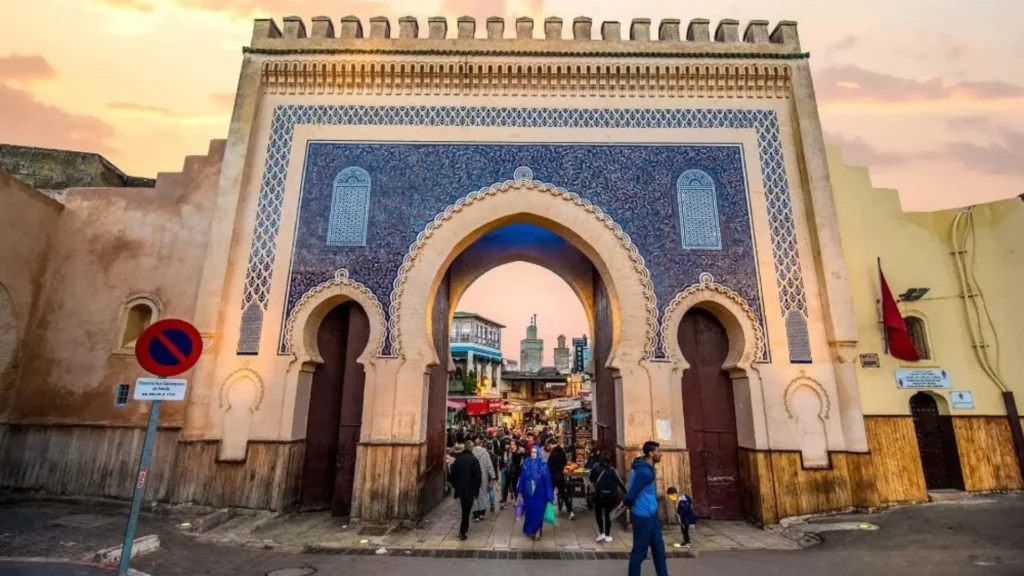
Fes: As the cultural capital of the country, Fes is home to the world’s oldest continuously operating university and a massive, medieval labyrinth-like Medina that feels like stepping back in time.
Executing the perfect journey across the Mediterranean requires a little bit of local knowledge. When looking into the best way to travel from Portugal to Morocco, keeping a few practical, everyday logistics in mind will help you transition smoothly between these two beautiful cultures.
While Portugal operates fully on the Euro (€), Morocco uses the Moroccan Dirham (MAD).
Cash is King: While major hotels, high-end restaurants, and boutique riads in cities like Marrakech or Casablanca accept international credit cards, the vast majority of local shops, market stalls, and traditional taxis operate strictly on cash.
Exchanging Money: You can easily exchange Euros for Dirhams at the airport, ferry terminals, or local bank branches upon arrival. Alternatively, using a local ATM to withdraw Dirhams directly is often the most convenient method.
Having reliable internet access makes it much easier to navigate the ancient medinas or map out how to travel from portugal to morocco regional destinations.
Your Portuguese or European SIM card will incur heavy roaming charges once you cross into Morocco. The smartest move is to pick up a local prepaid SIM card immediately at the airport or port. Providers like Maroc Telecom, Orange, and Inwi offer affordable tourist packages with generous data bundles for just a few Euros. If your smartphone supports it, you can also purchase an eSIM online before you even depart.
While Portuguese and English will serve you well in tourist hubs, knowing a few words of Moroccan Arabic (Darija) or French goes a long way. A simple “Salam Alaykum” (Hello) or “Shukran” (Thank you) shows immense respect and will instantly open doors to warm hospitality during your travel from Portugal to morocco.
Once you have decided on the best way to travel from Portugal to Morocco, the next strategic step is putting together a seamless itinerary. How you structure your route depends heavily on your entry point, your total vacation days, and what kind of experiences you want to prioritize.
If you are planning to travel from Portugal to morocco via the overland ferry route through Spain, your journey naturally begins in Tangier. A fantastic, high-efficiency loop for a 10-day trip looks like this:
Days 1–2: Tangier & the blue city of Chefchaouen.
Days 3–5: The historic imperial city of Fes and the ancient ruins of Volubilis.
Days 6–8: Driving south through the Middle Atlas to the Merzouga Sahara Desert for an unforgettable night in the dunes.
Days 9–10: Heading through the gorges toward Marrakech before preparing for your departure.
For travelers who choose the absolute fastest method, catching a direct flight from Lisbon or Porto, you will most likely land right in Marrakech or Casablanca.
If you land in Marrakech, you can structure a highly optimized itinerary that perfectly balances city culture with deep desert exploration. Spend your first couple of days getting lost in the lively souks of Marrakech, then head across the High Atlas Mountains towards Ouarzazate, and continue onward to the golden dunes of Merzouga. This itinerary minimizes unnecessary transit and maximizes your actual time experiencing the culture.
Regardless of which plan you choose, mapping your route beforehand guarantees that your how to travel from Portugal to morocco plans translate into a stress-free, magical vacation.
Once you complete your journey and successfully travel from Portugal to Morocco, navigating between the country’s iconic landmarks is the next step to figure out. Morocco boasts a highly modernized transit network that makes inner-country travel incredibly smooth.
While trains work perfectly for major city centers, they do not reach the deep, southern desert regions. If your plan on how to travel from portugal to morocco includes seeing the massive sand dunes of the Sahara, changing your transit style is necessary:
Car Rentals: Renting a vehicle directly at Moroccan airports gives you absolute flexibility to traverse the stunning High Atlas mountain passes at your own pace. The primary highway systems (Autoroutes) connecting major cities are top-tier toll roads.
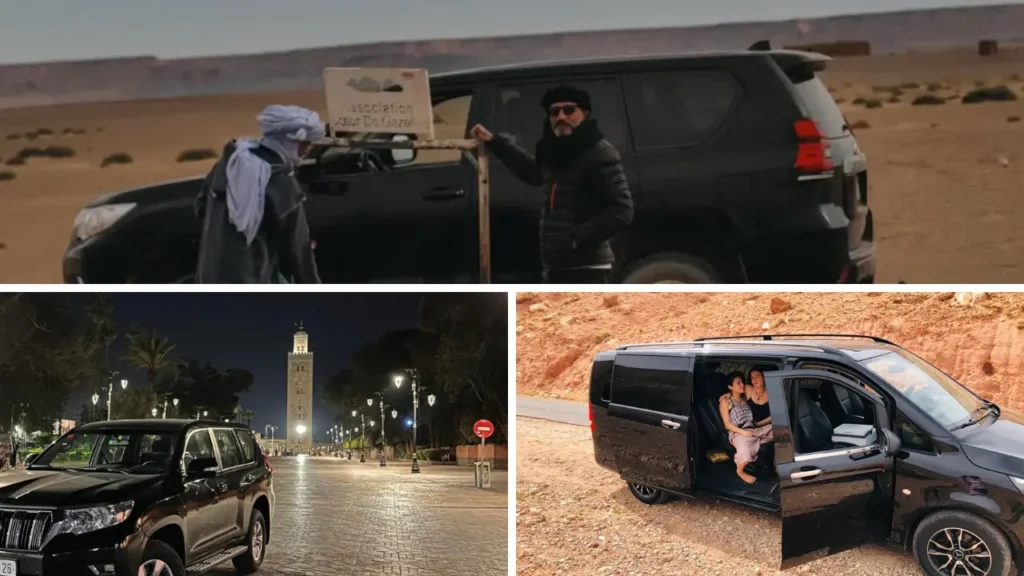
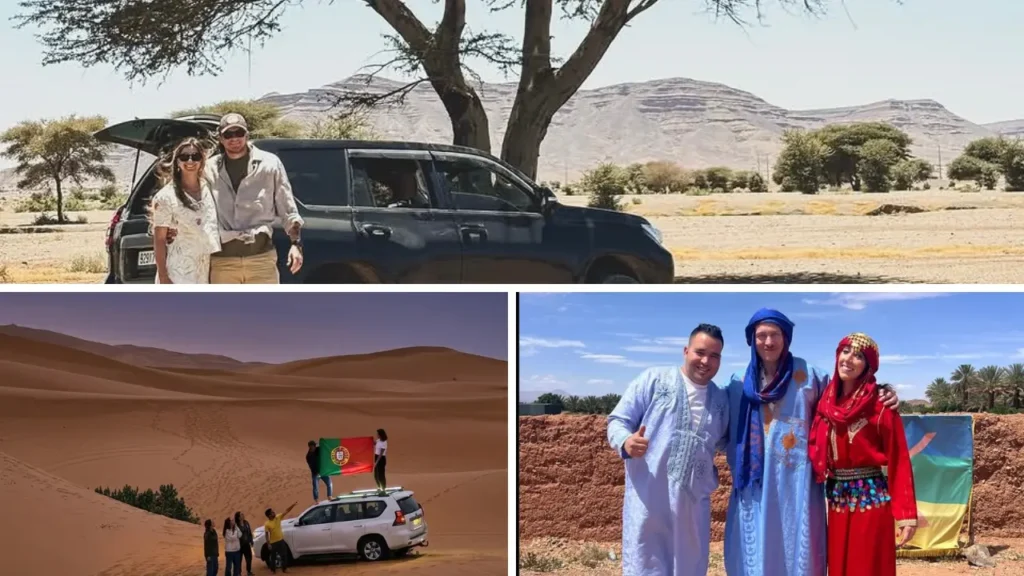
Private Guided Tours: For the ultimate stress-free vacation, many travelers hire a specialized desert tour agency. This options provides you with a private, comfortable 4×4 vehicle or executive van and a local professional driver who handles all the rugged desert terrain logistics for you.
The culinary transition from the Iberian Peninsula to North Africa is an absolute highlight of the trip, offering a masterclass in how different cultures use local ingredients to create deeply comforting, world-class cuisine.
In the coastal towns of the north, food is defined by simplicity and freshness. Coastal menus are dominated by grilled sardines, slow-simmered seafood rice, and salt-cod dishes, usually prepared with a drizzle of rich olive oil, garlic, and fresh parsley. The flavors are clean, delicate, and deeply tied to the Atlantic Ocean.
Crossing over into the interior completely shifts the flavor profile toward deep, earthy spices and complex aromas. The star of the kitchen becomes the iconic clay tagine, a conical vessel used to slow-cook tender meats, root vegetables, and fruits like prunes or preserved lemons over charcoal. The secret lies in the masterful blending of spices like cumin, cinnamon, ginger, and saff ron- creating rich, savory sauces that you scoop up with fresh, crusty khobz bread rather than using utensils.
The Couscous Ritual: Traditionally served on Fridays, this mountain of perfectly steamed semolina grains is topped with seven types of tender vegetables and slow-cooked meat, meant to be shared among family.
Pastilla: A brilliant sweet-and-savory masterpiece featuring layers of paper-thin, crispy pastry filled with shredded, spiced poultry, almonds, sugar, and a dusting of cinnamon.
The Mint Tea Hospitality: No meal or conversation is complete without Atay (Moroccan mint tea). Poured from high above to create a thick foam layer in the glass, this sweet, steaming blend of green tea and fresh spearmint leaves is the ultimate symbol of local welcome.
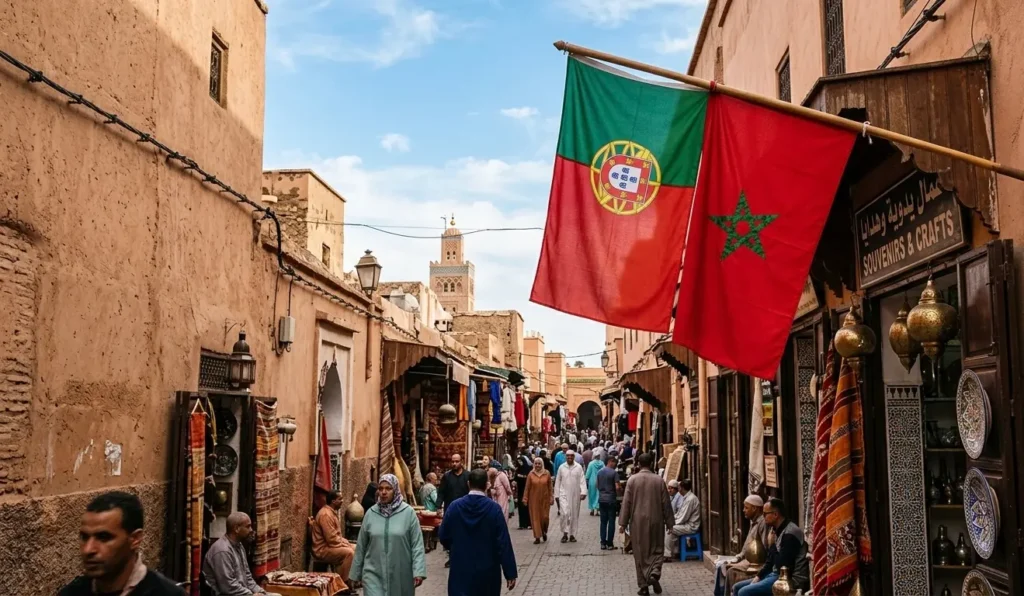
Stepping into a new country is always an exhilarating experience. When planning the best way to travel from Portugal to Morocco, taking a few smart precautions before you set off ensures that your adventure remains entirely positive, memorable, and secure from start to finish.
Morocco is a highly peaceful and welcoming destination for international visitors. However, as you figure out how to travel from Portugal to morocco and explore its bustling hubs, basic street smarts are your best asset.
In crowded city squares or narrow market alleys, petty crimes like pickpocketing can occasionally occur. Keep your valuables in secure, zipped bags. If you ever get lost in a historic medina, simply step inside a local shop or café to ask for proper directions. Furthermore, dressing modestly and covering shoulders and knees when exploring historic city centers shows great respect for local heritage.
Transitioning from the Atlantic edge of southwestern Europe into the vibrant, sun-drenched landscapes of North Africa is a journey that stays with you forever. The short physical distance between these regions hides a beautiful shift in history, architecture, and sensory experiences.
Whether you decide that catching a quick flight or taking an overland ferry road trip is the best way to travel from Portugal to Morocco for your specific style, the experience is guaranteed to be unforgettable. Now that you know exactly how to travel from Portugal to morocco safely and efficiently, all that is left to do is pack your bags, keep an open mind, and prepare to be utterly captivated by the magic waiting for you across the water.
To Marrakech Desert Tours is a professional team dedicated to showing you the very best of the Moroccan desert. We offer high-quality tours with expertly designed programs to give you an unforgettable experience.
ToMarrakechDesertTours.com is a group of local experts who love sharing the authentic beauty of Morocco. Our services are tailored for everyone, offering amazing adventures that fit any budget perfectly.
Copyright © 2026 All Right Reserved to marrakech desert tours