- tomarrakechdeserttours@gmail.com
- +212702431727

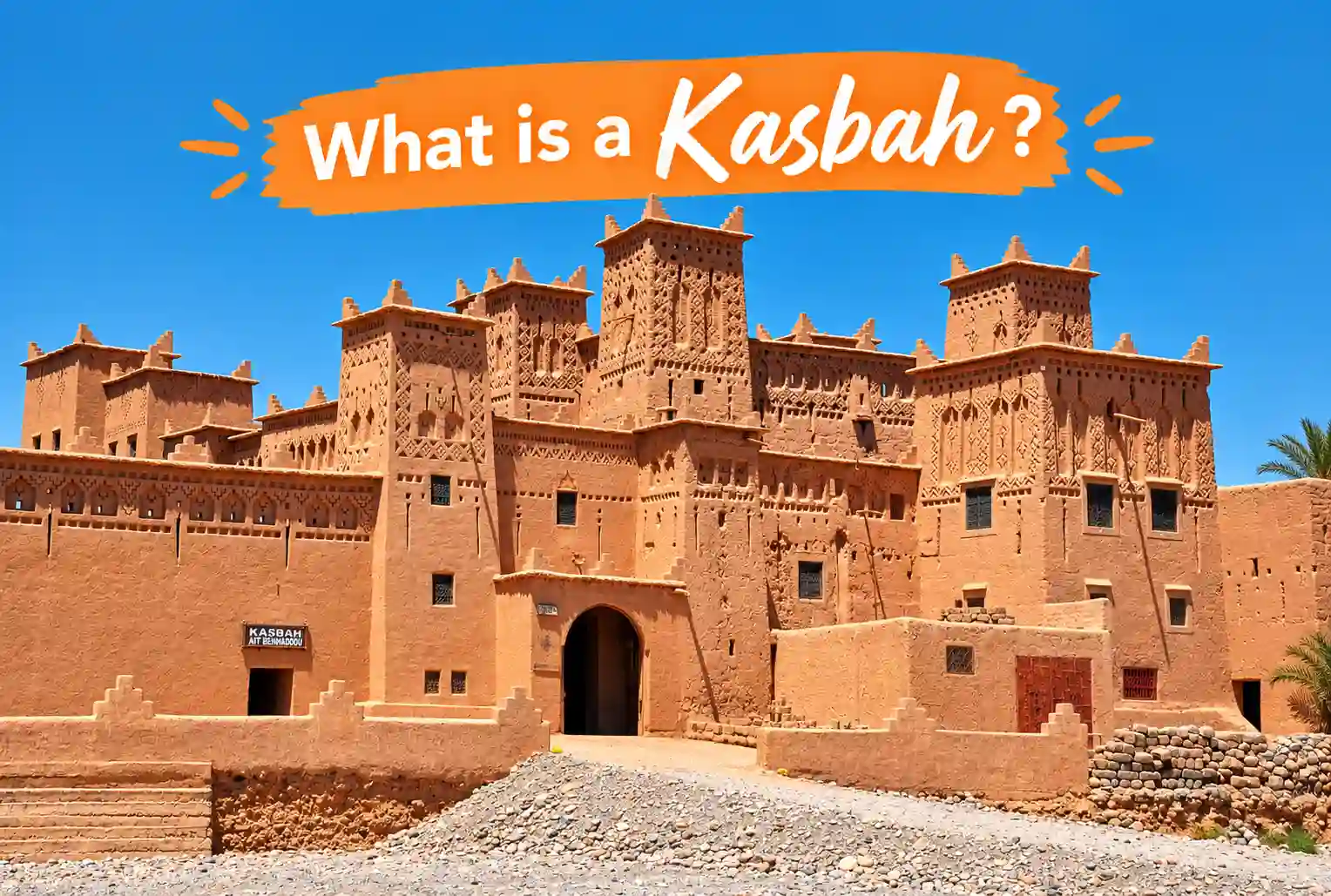
If you have ever traveled through Morocco, you have probably heard the word “Kasbah” many times. But what is a casbah exactly, and why does this word appear so often in Moroccan travel guides, movies, and songs? This simple question actually opens the door to a fascinating piece of North African history and architecture.
In this guide, we will answer the question “what is a casbah” in full detail, exploring its history, design, purpose, and importance in Moroccan culture. By the end, you will not only understand what a casbah is, but also why these buildings remain some of the most impressive structures in the entire country.
Let’s explore the story behind the casbah!
To start simply, a casbah is a type of fortified structure or fortress, traditionally built from earth and clay materials, found throughout Morocco and other parts of North Africa. When people ask “what is a Kasbah,” the easiest answer is that it functioned as a protective stronghold for a family, tribe, or ruling authority.
Unlike a simple house, a casbah was designed with defense in mind. High walls, small windows, and strong corner towers were common features, allowing residents to protect themselves and their belongings from potential attacks or raids.
Over time, the word casbah came to represent not just a single building, but sometimes an entire fortified neighborhood or old town area, especially in cities like Algiers or Tangier.
This basic definition sets the foundation for understanding everything else about these remarkable buildings.
Understanding what a casbah is becomes much clearer once you learn about its historical background. Casbahs became especially common in southern Morocco, where powerful families needed strongholds to protect valuable trade routes, agricultural land, and water sources in the desert regions.
Many casbahs were built during periods when different tribes and ruling families competed for control over land and trade. A strong casbah symbolized power and protection, often standing at the entrance to a valley or along an important travel route.
As trade routes shifted and political power changed over centuries, many casbahs were expanded, rebuilt, or eventually abandoned, leaving behind the impressive ruins that travelers admire today.
This historical context helps explain why so many casbahs are found scattered throughout southern Morocco today.
When exploring what a casbah is from an architectural perspective, several key design features stand out. Most casbahs were built using thick, high walls, often reaching several stories tall, with very few windows facing outward for added security.
Corner towers were another common feature, allowing residents to observe the surrounding landscape and spot potential threats from a distance. Inside, the layout was often organized around a central courtyard, providing light and air while keeping the outer walls solid and protective.
Decorative geometric patterns were sometimes carved directly into the outer walls, blending beauty with function in a way that remains impressive even in ruined casbahs today.
These architectural choices reflect the practical, defense-focused thinking behind casbah design.
A major part of answering “what is a Kasbah” involves understanding the materials used in its construction. Traditional casbahs were built primarily using a mixture of earth, clay, straw, and water, known as pisé or rammed earth construction.
This building method used materials found directly in the local environment, making construction more affordable and practical in remote desert regions where other materials were harder to transport. Walls were built in layers, packed tightly to create strong, thick structures capable of withstanding both weather and potential attacks.
While incredibly effective for centuries, these earthen materials also require ongoing maintenance, which is why many old casbahs have slowly eroded over time without proper care and restoration.
This natural building method is part of what gives casbahs their distinctive reddish-brown appearance.
One common point of confusion when learning what a casbah is involves similar-sounding terms like “kasbah” and “ksar.” In many cases, casbah and kasbah refer to the same type of fortified structure, with the spelling simply varying depending on translation and regional language influence.
A “ksar,” however, usually refers to a larger fortified village made up of multiple homes surrounded by a protective wall, rather than a single fortress-like structure. Some famous sites, like Ait Ben Haddou, are technically ksour containing several individual kasbahs or casbahs within their walls.
Understanding these small differences helps travelers better appreciate what they are actually looking at when visiting historic sites across Morocco.
Knowing this distinction adds helpful context to your visits around southern Morocco.
Now that we’ve answered what a casbah is in general terms, it helps to look at specific examples. One of the most famous is Ait Ben Haddou, a UNESCO World Heritage Site near Ouarzazate, often featured in films and known for its stunning red-clay walls.
Another notable example is the Taourirt Kasbah in Ouarzazate itself, once home to a powerful local ruling family. Smaller, lesser-known casbahs are also scattered throughout the Draa and Dades valleys, offering quieter, less crowded alternatives for curious travelers.
Visiting these sites in person brings the answer to “what is a casbah” to life far better than any description alone ever could.
These real-world examples make the concept of a casbah much easier to understand and appreciate.
Beyond defense, casbahs also served as living spaces, and understanding daily life inside one adds another layer to the question of what a casbah is. Extended families often lived together within the same casbah, sharing courtyards, storage rooms, and communal spaces.
Ground floors were typically used for storage or housing animals, while upper floors contained living quarters for family members. This layout helped protect valuable resources like grain and water while keeping living spaces safer and more private above.
Life inside a casbah followed the rhythms of agricultural and trading seasons, with the fortress serving as both a home and a center of daily economic activity for the family living there.
This glimpse into daily life shows that a casbah was far more than just a defensive structure.
Many casbahs across Morocco have faced challenges over the years, since their traditional earthen materials naturally erode without regular maintenance. Understanding what a casbah is today also means recognizing the ongoing efforts to preserve these important historical sites.
Organizations and local communities have worked to restore some of the most significant casbahs, recognizing both their cultural value and their importance for tourism. Sites like Ait Ben Haddou have benefited from restoration projects that help maintain their structure for future generations.
Tourism has also played a role in preservation, as increased visitor interest has encouraged investment in maintaining these historic sites rather than allowing them to disappear entirely.
These preservation efforts ensure that future travelers can still experience these remarkable structures firsthand.
For travelers wanting an even deeper answer to what a casbah is, staying overnight in one offers an unforgettable experience. Several historic casbahs across southern Morocco have been carefully converted into guesthouses or small hotels, blending traditional architecture with modern comfort.
Sleeping within thick earthen walls, surrounded by centuries-old design, gives visitors a much more personal connection to Moroccan history than simply viewing a casbah from the outside. Many of these converted casbahs also offer traditional meals and cultural experiences alongside the stay.
This type of accommodation has become increasingly popular among travelers seeking something more meaningful than a standard hotel room.
Staying in a casbah turns a simple visit into an immersive historical experience.
If you’re planning to visit a casbah during your trip to Morocco, a little preparation goes a long way. Wearing comfortable shoes is important, since many casbahs involve walking on uneven earthen floors and narrow stairways.
Hiring a local guide can also greatly improve your visit, since they can explain the history and specific features of each casbah in far more detail than a simple sign or brochure. Additionally, visiting earlier in the day often means fewer crowds and better lighting for photography.
Respecting these historic structures by not climbing on fragile walls or removing any materials helps ensure they remain standing for future visitors to enjoy as well.
Following these simple tips helps ensure a safe, respectful, and rewarding casbah visit.
So, what is a casbah? At its core, it is a fortified structure built to protect families, resources, and trade routes throughout Morocco’s history, constructed from earth and designed with defense, community, and daily life all in mind. From dramatic desert fortresses to converted guesthouses, casbahs continue to tell the story of Morocco’s rich cultural past.
Visiting one of these remarkable structures offers far more than a simple photo opportunity, it provides a genuine connection to centuries of history, architecture, and tradition that still shapes southern Morocco today.
At To Marrakech Desert Tours, we love including visits to historic casbahs as part of our desert route itineraries, helping travelers experience this incredible piece of Moroccan heritage firsthand. Let us help you discover the story behind these unforgettable fortresses on your next Morocco adventure.
To Marrakech Desert Tours is a professional team dedicated to showing you the very best of the Moroccan desert. We offer high-quality tours with expertly designed programs to give you an unforgettable experience.
ToMarrakechDesertTours.com is a group of local experts who love sharing the authentic beauty of Morocco.
Our services are tailored for everyone, offering amazing adventures that fit any budget perfectly.
⇢ Booking directly with a local team saves you time, money, and stress, and makes sure every part of your trip is well organized.
⇢ Our guides and drivers are passionate about Morocco and love sharing its culture, history, and landscapes with our guests.
⇢ Every tour is private and flexible, so we can adapt the route, the pace, and the activities to your wishes.
© 2026 TO MARRAKECH DESERT TOURS. ALL RIGHTS RESERVED.