
16 Important Facts About the Sahara Desert
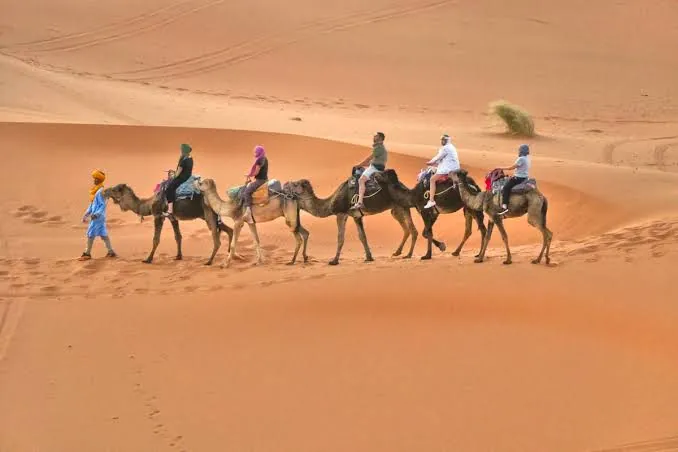
The Sahara is one of the most famous places on Earth. Almost everyone has seen photos of its golden dunes and camel caravans, but there is much more to this huge desert than sand. It has mountains, lakes under the ground, snow on some days, and a long human history.
In this guide we share 16 important facts about the Sahara Desert, explained in simple words. Some of them will surprise you, and all of them will help you understand the desert before you visit it.
Let’s discover the important facts about the Sahara Desert!
Table of Contents: Important Facts About the Sahara Desert
1. The Sahara Is the Largest Hot Desert in the World
The Sahara covers about 9.2 million square kilometers of North Africa. That is almost the size of the United States or China. It stretches about 4,800 km from the Atlantic Ocean in the west to the Red Sea in the east.
Only the polar deserts of Antarctica and the Arctic are bigger, because a desert is any place with very little rain, even if it is cold. Among hot deserts, nothing comes close to the Sahara.
- Area: about 9.2 million km²
- Width: about 4,800 km from west to east
- Third largest desert after Antarctica and the Arctic
2. It Covers Parts of About 11 Countries
The Sahara is shared by many nations: Morocco, Algeria, Tunisia, Libya, Egypt, Sudan, Chad, Niger, Mali and Mauritania, together with the territory of Western Sahara.
In Morocco, the most famous part of the desert is in the southeast, near Merzouga and Zagora, where you find the big dunes of Erg Chebbi and Erg Chigaga.
3. Its Name Simply Means “Desert”
The word Sahara comes from the Arabic word sahra, which means desert. So when people say “Sahara Desert”, they are really saying “Desert Desert”.
The local Amazigh (Berber) people have their own words for the different kinds of desert, from sandy dunes to stony plains, because for them the Sahara is not one single landscape.
4. Most of the Sahara Is Not Sand
This is one of the biggest surprises for visitors. Sand dunes cover only about 25% of the Sahara. The rest is made of stony plains, rocky plateaus, dry valleys, salt flats and mountains.
- Erg: a sea of sand dunes, like Erg Chebbi in Merzouga
- Reg: a flat plain covered with gravel and small stones
- Hamada: a high plateau of bare rock
- Chott: a dry salt lake
5. Some Dunes Are as Tall as a Skyscraper
The highest Sahara dunes can rise to more than 150 meters. In Morocco, the tallest dunes of Erg Chebbi near Merzouga reach about 150 meters, which is about the height of a 50-floor building.
Dunes are always moving. The wind pushes the sand slowly, and their shape changes from season to season. Climbing one at sunrise or sunset is one of the best experiences in the desert.
6. The Sahara Was Once Green
Between about 11,000 and 5,000 years ago, the Sahara was green. Rain fell much more often, and there were grasslands, rivers and big lakes. Hippos, giraffes, elephants and crocodiles lived where today there is only sand.
Scientists call this time the “Green Sahara” or African Humid Period. Old rock paintings and engravings in places like Tassili n’Ajjer in Algeria show people hunting and herding cattle in this green land.
7. Days Are Very Hot, but Nights Can Be Cold
In summer, the air temperature in the Sahara often goes above 45°C, and the sand itself can become much hotter. But the dry air does not keep the heat, so when the sun goes down the temperature drops very quickly.
In winter, nights in the desert can be close to 0°C. This is why we always tell our travelers to bring a warm layer for the night in the desert camp, even if the day was hot.
- Summer days: often above 45°C
- Winter nights: can drop close to freezing
- Best time to visit: spring and autumn
8. It Almost Never Rains
Large parts of the Sahara receive less than 100 mm of rain in a year, and in the driest areas it can stay without rain for several years. When rain does come, it is often a short and strong storm.
After a rare rain, the desert can change in a few days: small plants and flowers appear, and seasonal lakes like Dayet Srji near Merzouga can fill with water and attract birds.
9. Yes, It Sometimes Snows in the Sahara
It sounds impossible, but snow has fallen on the Sahara several times. The town of Ain Sefra in Algeria, at the edge of the desert, saw snow on its red dunes in 1979, 2016, 2018 and again in later years.
The snow never stays long, usually just a few hours, but the photos of white snow on orange sand travel all around the world.
10. The Sahara Has Real Mountains
The Sahara is not flat everywhere. It has several mountain ranges, including the Tibesti in Chad, the Hoggar (Ahaggar) in Algeria and the Aïr in Niger.
The highest point of the Sahara is Emi Koussi, an old volcano in the Tibesti Mountains of Chad, at about 3,415 meters above sea level.
11. There Is Water Under the Sand
Under parts of the Sahara lie huge reserves of underground water, stored in the rocks for thousands of years. The Nubian Sandstone Aquifer, under Egypt, Libya, Sudan and Chad, is one of the biggest fossil water systems in the world.
Where this water reaches the surface, oases appear, with palm trees, gardens and villages. In Morocco, you can see beautiful oases in the Ziz Valley, the Draa Valley and the Todra Gorges on the way to the desert.
12. Sahara Dust Helps the Amazon Rainforest
Strong winds lift millions of tons of Sahara dust every year and carry it across the Atlantic Ocean. A NASA satellite study found that about 27.7 million tons of this dust reach the Amazon basin each year.
The dust contains phosphorus, a nutrient that plants need. In this way, the driest place in Africa helps feed one of the greenest forests on the planet.
13. Many Animals Live in the Desert
Life in the Sahara is hard, but many animals have learned to survive with little water and big changes in temperature. Most of them are active at night, when it is cooler.
- Dromedary camel: can walk many days with little water
- Fennec fox: a small fox with very big ears that help it lose heat
- Dorcas gazelle and addax: antelopes adapted to dry land
- Desert monitor lizard, scorpions and beetles
- Saharan silver ant: one of the fastest ants in the world, active in the hottest hours
14. Millions of People Call the Sahara Home
About two and a half million people live in the Sahara. Most of them live in oases, towns and villages, while some families still keep a nomadic life with their animals.
The desert is home to many peoples, including the Amazigh (Berbers), the Tuareg, the Sahrawi and the Toubou. Near Merzouga, you can visit nomad families and the village of Khamlia, famous for its Gnawa music.
15. Caravans Crossed It for Centuries
For more than a thousand years, camel caravans crossed the Sahara carrying salt, gold, ivory, cloth and spices between North Africa and West Africa. Some caravans had thousands of camels.
One of the most important caravan cities was Sijilmassa, near today’s Rissani in Morocco, very close to Merzouga. Many of the kasbahs and ksour you see on a desert tour were built along these old trade routes.
16. The Sahara Is Growing
A study from the University of Maryland, published in 2018, found that the Sahara grew by about 10% between 1920 and 2013. Natural climate cycles and climate change both play a part.
The desert grows mostly on its southern edge, in the Sahel region. This is one reason why protecting water, plants and oases is so important for the people who live there.
Conclusion
The Sahara is much more than an ocean of sand. It is a land of mountains, oases, hidden water, ancient history and strong people who have learned to live with the desert. Knowing these important facts about the Sahara Desert makes a visit even more special.
The best way to understand the Sahara is to see it with your own eyes: ride a camel at sunset, sleep under the stars and wake up early to watch the sunrise over the dunes.
At To Marrakech Desert Tours, we take travelers to the Moroccan Sahara every week. You can join our shared 3 days desert tour from Marrakech or take more time with our shared 4 days desert tour from Marrakech. Contact us and we will help you plan your Sahara adventure.
Contact Us
Click any destination below to preview the complete itinerary
Tours from Marrakech
Tours from Fes
Tours from Tangier
Tours From Casablanca
Morocco Tours For Seniors
Best Marrakech Desert Tours
2 Days Desert Tour from Marrakech to Merzouga
2 Days Desert Tour from Marrakech to Fes
3 Days Desert Tour from Marrakech to Merzouga
3 Days Desert Tour from Marrakech to Fes
4 Days Desert Tour from Marrakech to Merzouga
5 Days Desert Tour from Marrakech to Merzouga
5 Days Sahara Desert Tour from Marrakech
6 Days Desert Tour from Marrakech to Csablanca
7 Days Desert Tour from Marrakech to Casablanca
8 Days Morocco Tour From Marrakech
10 Days Morocco Tour From Marrakech
12 Days Morocco Tour From Marrakech
Best Fes Desert Tours
2 Days Desert Tour from Fes to Merzouga
2 Days Desert Tour from Fes to Marrakech
3 Days Desert Tour from Fes to Marrakech
4 Days Desert Tour from Fes to Marrakech
5 Days Desert Tour from Fes to Marrakech
Best Tangier Desert Tours
5 Days Tour from Tangier to Marrakech
6 Days Tour from Tangier to Marrakech
7 Days Tour from Tangier to Marrakech
Best Casablanca Desert Tours
4 Days Tour From Casablanca
6 Days Tour From Casablanca
7 Days Tour From Casablanca
9 Days Tour From Casablanca
10 Days Tour From Casablanca
12 Days Tour From Casablanca
14 Days Tour From Casablanca
Day Trips From Marrakech