
What Animals Are in the Sahara? A Simple Guide to Desert Wildlife in Morocco
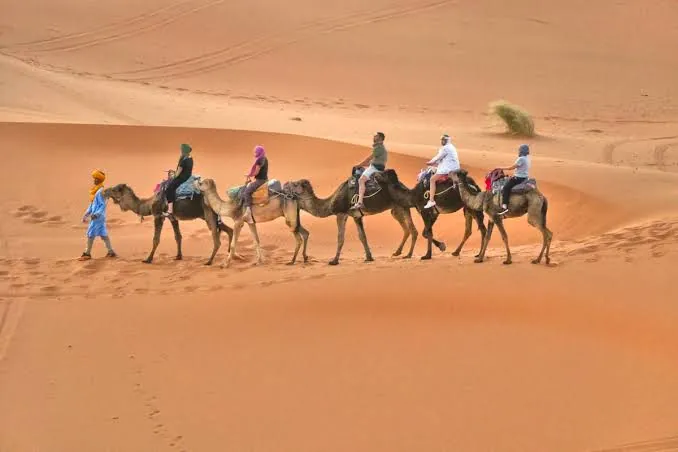
When people imagine the Sahara, they see only sand, sun and silence. So many travelers are surprised when we tell them that the desert is full of life. What animals are in the Sahara? The answer is: many more than you think. Foxes with giant ears, small jumping rodents, colorful lizards, beetles, scorpions, snakes and dozens of birds all live here. Most of them hide during the hot day and come out at night.
In this guide we introduce the most interesting animals of the Sahara, explain how they survive in such a hard place, and tell you which ones you can really see on a desert tour in Merzouga. Everything is explained in simple words, for adults and children.
The Sahara is home to mammals like the dromedary camel, the fennec fox, the jerboa, the desert hedgehog, the sand cat and rare gazelles; reptiles like the horned viper, the spiny-tailed lizard and the sandfish skink; insects and arachnids like scarab beetles and scorpions; and many birds, such as the desert sparrow and, after rain, flamingos. Most desert animals are active at night, so you often see their footprints more than the animals themselves.
Table of Contents: What Animals Are in the Sahara?
How Do Animals Survive in the Sahara?
The Sahara is one of the hottest and driest places on Earth. To live here, animals have developed clever tricks:
- They come out at night. Most desert animals sleep in burrows or under rocks during the day and look for food when it is cool.
- They need very little water. Many animals never drink. They get water from seeds, plants or the animals they eat.
- They have big ears or light colors. Big ears help to lose heat, and sand-colored skin or fur keeps them cool and hidden.
- They move on the sand easily. Wide feet, hairy paws or special scales help them walk, run or even swim in the sand.
- They save energy. Some animals sleep through the hottest weeks of the year.
Mammals of the Sahara
These are the most famous mammals of the desert. Some, like the camel, you will meet for sure. Others are shy and live far from people.
Dromedary Camel
The symbol of the Sahara. Its one hump stores fat, not water, and it can go for many days without drinking. Wide, soft feet help it walk on sand.
Yes, on every camel rideFennec Fox
The smallest fox in the world, with huge ears that help it hear insects under the sand and lose body heat. It lives in burrows and comes out at night.
Rare, but its tracks are commonJerboa
A tiny rodent that jumps like a mini kangaroo on its long back legs, using its tail for balance. It does not need to drink water.
Sometimes at night near campsDesert Hedgehog
A small hedgehog with big ears and a pale face. It eats insects, scorpions and even small snakes at night.
Rare, at nightSand Cat
A small wild cat with thick fur on its paws to walk on hot sand. It is very shy and hard to see.
Very rareDorcas Gazelle and Addax
Elegant antelopes of the desert. They are now rare because of hunting, and the addax is one of the most endangered animals in the world.
Very rare in the wildReptiles of the Sahara
Reptiles love the heat, so the Sahara is a great home for them. In Morocco’s desert you can find:
Spiny-Tailed Lizard
A big, peaceful lizard with a spiky tail. It eats plants and warms up in the sun in the morning. Its color can change with the temperature.
Sometimes on rocky groundSandfish Skink
A small, shiny lizard that “swims” under the sand to escape the heat and to hunt insects.
Rare, hides in sandHorned Viper
A venomous snake with two small “horns” above its eyes. It buries itself in the sand during the day and moves sideways on the dunes.
Very rare, keep your distanceDesert Monitor
A large lizard that can grow longer than one meter. It hunts small animals and moves fast.
Very rareInsects, Spiders and Scorpions
The smallest animals are the most numerous. Look closely at the dunes in the morning and you will see tiny tracks everywhere.
- Darkling and scarab beetles: black beetles that walk on the dunes and leave lines of tiny footprints. Some collect water from the morning air.
- Scorpions: several kinds live in the Sahara, including the yellow deathstalker, which is very venomous. They hide under stones during the day.
- Camel spiders: big, fast and hairy, but not dangerous to people.
- Ants: desert ants can run on hot sand and find their way home using the sun.
Safety tip: do not lift stones with your hands, shake your shoes before you put them on, and use a light when you walk at night. In the camps, the risk is very low, but it is good to be careful.
Birds of the Sahara
The Merzouga area is famous among bird watchers. The dunes, palm groves and seasonal lakes attract many species, especially in spring and autumn.
- Desert sparrow: a pale, pretty sparrow that bird watchers come from far away to see near Erg Chebbi.
- Brown-necked raven: often seen near camps and villages.
- Desert wheatear and white-crowned wheatear: small black-and-white birds that sit on rocks.
- Fulvous babbler: sandy-brown birds that move in noisy little groups.
- Cream-colored courser: a fast runner on the stony desert.
- Pharaoh eagle-owl and Egyptian nightjar: night birds that are hard to find.
- Flamingos: after good rains, the lake of Dayet Srji near Merzouga fills with water and sometimes welcomes pink flamingos. Read more about Merzouga Lake.
Which Animals Can You See on a Desert Tour?
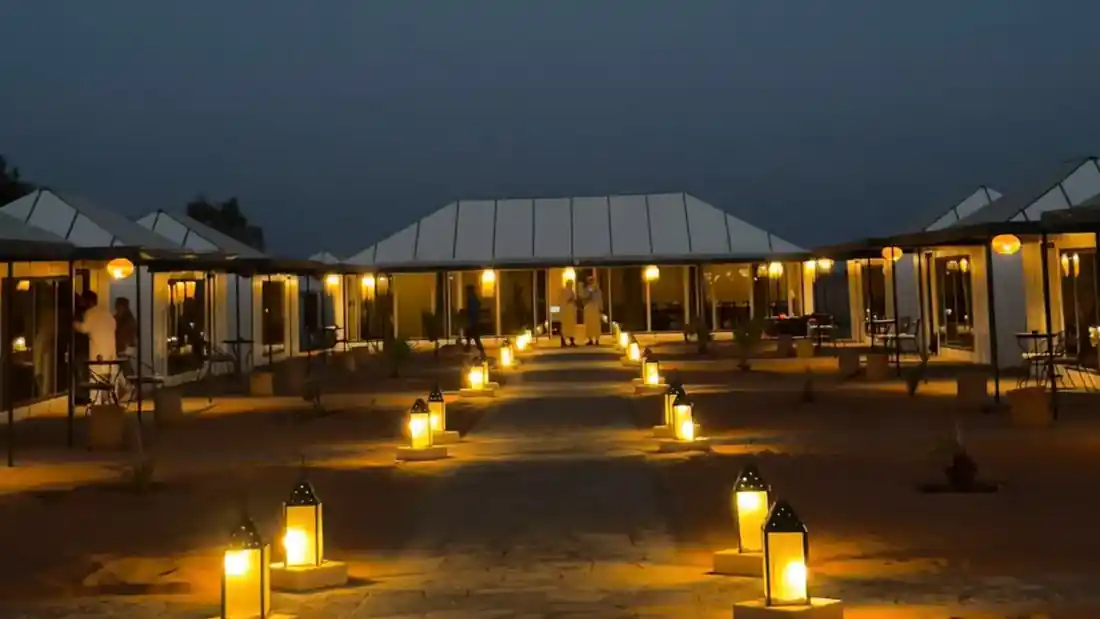
Let us be honest: the Sahara is not a safari park. Wild animals are shy and active at night, so you will not see them every day. But there is a lot to discover if you know where to look:
- Camels: 100% sure. You ride them at sunset and you see herds near the dunes.
- Footprints in the sand: in the early morning, the dunes are full of tracks of foxes, jerboas, beetles and birds. Ask your guide to “read” them for you.
- Birds: very likely, especially around the palm groves and at sunrise.
- Lizards and beetles: likely on warm days.
- Fennec fox: possible but lucky. Some camps and villages know where they live.
- Nomad animals: on a visit to a nomad family you see goats, sheep and camels, and learn how people and animals live together in the desert.
A 4 days tour from Marrakech to Merzouga gives you more time in the dunes, and a 4×4 tour around Erg Chebbi takes you to the nomads, the lake and the stony desert where wildlife is easier to find.
How to Respect Desert Wildlife
- Watch animals from a distance and never try to touch or catch them.
- Do not feed wild animals; human food can make them sick.
- Do not buy animals or animal products sold as souvenirs, like stuffed lizards or fox skins.
- Stay on the tracks with vehicles, because quads and 4x4s can destroy burrows.
- Take your rubbish with you. Plastic is very dangerous for desert animals.
Desert Tours to Discover Sahara Wildlife
Want to see the Sahara and its animals with your own eyes? Here are some of our favorite tours:
2 Day Desert Tour From Marrakech
Cross the High Atlas, visit Ait Ben Haddou and sleep one night in a desert camp.
See the itinerary →3 days3 Days Desert Tour to Merzouga
Camel ride at sunset, a night in the Erg Chebbi dunes and a sunrise full of animal tracks.
See the itinerary →4 days4 Days Tour From Marrakech to Merzouga
More time in the desert, with the Dades Valley, the Todra Gorges and the dunes.
See the itinerary →5 days5 Days Desert Tour From Fes
From the medina of Fes to the Sahara, then across the kasbahs to Marrakech.
See the itinerary →1 dayAgafay Desert Day Trip
A short desert experience near Marrakech, with a camel ride and dinner under the stars.
See the itinerary →Your wayDesign Your Own Tour
Love nature and birds? Tell us, and we plan a private trip with more time for wildlife.
See the itinerary →Frequently Asked Questions
What is the most famous animal of the Sahara?
The dromedary camel. It has carried people and goods across the desert for centuries, and you can ride one in Merzouga. Learn more in our guide: are there camels in Morocco?
Are there lions in the Sahara?
No. Lions lived in North Africa a long time ago, but they disappeared from the wild many years ago. There are no lions in the Sahara today.
Is it dangerous to sleep in the desert because of animals?
No. Snakes and scorpions avoid people, and desert camps are safe. Just shake your shoes in the morning and use a light at night.
Can I see a fennec fox in Merzouga?
It is possible but not common, because the fennec is shy and comes out at night. You will often see its footprints in the morning.
Do camels store water in their humps?
No. The hump stores fat. Camels can go many days without water because their bodies use water very carefully.
What is the best time to see birds in the Sahara?
Spring (March to May) and autumn are the best seasons, when many birds pass through Morocco on migration.
Are there snakes in the Sahara?
Yes, including the horned viper, but they are rarely seen. They hide in the sand during the day and avoid people.
Conclusion
So, what animals are in the Sahara? Camels, fennec foxes, jerboas, hedgehogs, lizards, snakes, beetles, scorpions and many birds all share this huge desert. They are masters of survival, and most of them wait for the cool night to come out. On a desert tour you will ride camels, read footprints in the sand and, with a little luck, meet some of these amazing animals.
Want to learn more about the desert? Read our important facts about the Sahara desert. If you have a question or want to plan your desert trip, send us a message with the form below or on WhatsApp.
contact us
Click any destination below to preview the complete itinerary
- 2 Days Desert Tour from Marrakech to Merzouga
- 2 Days Desert Tour from Marrakech to Fes
- 3 Days Desert Tour from Marrakech to Merzouga
- 3 Days Desert Tour from Marrakech to Fes
- 4 Days Desert Tour from Marrakech to Merzouga
- 5 Days Desert Tour from Marrakech to Merzouga
- 5 Days Sahara Desert Tour from Marrakech
- 6 Days Desert Tour from Marrakech to Csablanca
- 7 Days Desert Tour from Marrakech to Casablanca
- 8 Days Morocco Tour From Marrakech
- 10 Days Morocco Tour From Marrakech
- 12 Days Morocco Tour From Marrakech