- tomarrakechdeserttours@gmail.com
- +212702431727

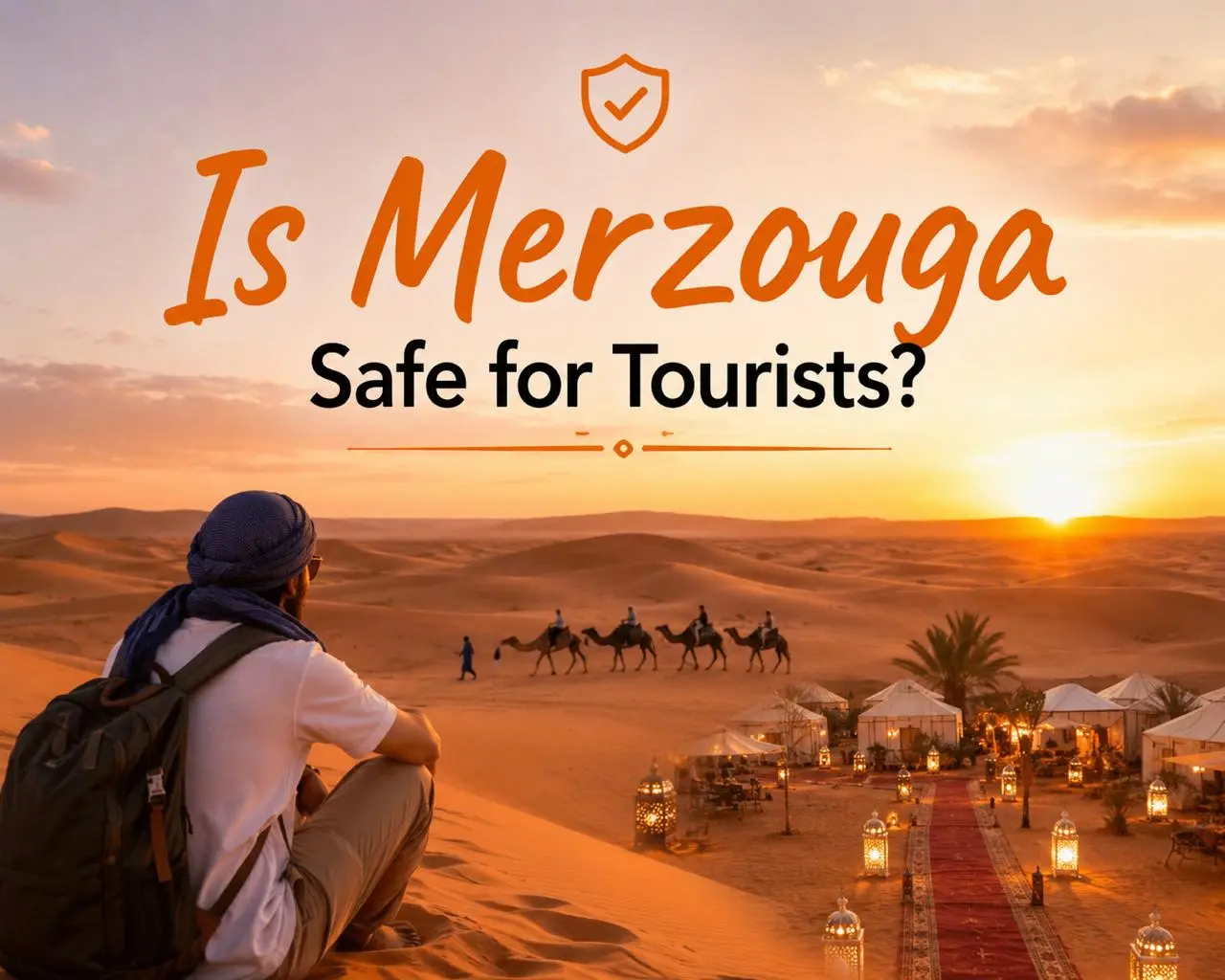
Yes, Merzouga is exceptionally safe for tourists. Located in southeastern Morocco at the edge of the Erg Chebbi dunes, this small desert village relies almost entirely on tourism and is widely considered one of the peaceful, friendly, and secure destinations in the country. Violent crime is virtually non-existent, and local desert hospitality ensures visitors feel welcomed from the moment they arrive.
While crime is not a concern, traveling in a remote desert environment presents unique considerations. Safety in Merzouga is less about human threats and more about preparation: navigating extreme heat, staying hydrated, choosing experienced desert guides, and preparing for long drives across rural Morocco.
Whether you are traveling solo, as a family, or in a group, understanding local customs and basic desert precautions will ensure a smooth, worry-free adventure under the Saharan stars.
When asking is Merzouga safe for tourists, understanding the local security landscape is key. Merzouga boasts extremely low crime rates compared to major international travel hubs. The tight-knit Amazigh community takes immense pride in desert hospitality (Tamazight culture), making violent crime against travelers almost unheard of.
Virtually Zero Violent Crime: Violent offenses targeting foreigners do not occur in Merzouga. The desert community is self-policing, and protecting visitors is both a cultural obligation and an economic necessity for local families.
Low Risk of Theft: Pickpocketing and bag snatching, which can occasionally happen in crowded imperial city medinas, are exceptionally rare in the open desert villages and camps. Standard common-sense precautions, such as locking your hotel room and keeping valuables out of plain sight in parked vehicles, are all that is required.
Solo Travel Safety: Merzouga is widely considered one of the safest places in Morocco for solo travelers. The quiet atmosphere and welcoming nature of camp staff create a secure environment.
Hassle & Harassment: Catcalling and aggressive street hustling are significantly lower here than in cities like Marrakech or Tangier. Desert guides and camp staff are generally respectful. To maintain smooth interactions, a polite but firm “No, thank you” (La, Shukran) is usually all it takes to deter persistent vendor attention.
Roadside Fake Guides: As you approach Erfoud, Rissani, or the entrance roads to Merzouga, you may encounter individuals flagging down cars offering “cheap desert tours,” “free camel rides,” or claiming roads are closed.
Prevention: Always book your desert tours, drivers, and camps through reputable, licensed operators or verified accommodation providers in advance rather than accepting unsolicited roadside offers.
Gendarmerie Royale: Morocco maintains a visible military and royal gendarmerie presence along the main desert highways and checkpoints leading into Merzouga to ensure regional stability.
Border Safety: While Merzouga is located relatively close to the Algerian border, the frontier zone is heavily monitored and secured by military outposts. Tourists staying within established dune areas, camps, and guided routes face zero risk from border proximity.

n Merzouga, the primary safety risks stem from environmental conditions rather than human threats. Staying healthy in a Saharan climate requires taking proactive measures against heat, dehydration, and sun exposure.
Extreme Temperatures & Heatstroke:
Summer temperatures (June to August) regularly exceed 40°C to 45°C (104°F – 113°F).
Avoid outdoor activities during peak afternoon hours (12:00 PM to 4:00 PM). Schedule camel treks, dune walks, and quad rides exclusively for early morning or late afternoon.
Dehydration & Electrolyte Loss:
The dry desert air absorbs moisture rapidly, meaning you can become dehydrated without noticing sweat.
Drink at least 3 to 4 liters of bottled water per day. Carry electrolyte powders or tablets to replenish essential salts lost through perspiration.
Sun Exposure & UV Protection:
High-elevation sand dunes reflect intense sunlight, accelerating sunburn and heat exhaustion.
Wear lightweight, long-sleeved linen or cotton clothing, broad-spectrum sunscreen (SPF 50+), UV-blocking sunglasses, and a traditional Berber headscarf (tagelmust) to protect your face and neck from UV rays and blowing sand.
Freezing Winter Nights:
Winter nighttime temperatures (December to February) can drop abruptly toward 2°C to 5°C (35°F – 41°F).
Pack heavy thermal layers, fleece jackets, and warm socks if staying in desert camps during winter, as unheated tents cool down rapidly after sunset.
Food, Water & Sanitation:
Drink only sealed bottled water; never drink untreated tap water or well water in rural desert areas.
Eat freshly cooked, hot meals like tagines and couscous prepared in clean camp environments, and avoid raw street salads or unpeeled fruit if you have a sensitive stomach.
Desert Fauna (Scorpions & Snakes):
Venomous scorpions and desert vipers inhabit the Sahara, but they are nocturnal, shy, and rarely encountered in active tourist areas or well-kept camps.
Always shake out your shoes, boots, and bags before putting them on, and avoid walking barefoot outside your tent or hotel at night without a flashlight.
Medical Access & Pharmacy Availability:
Merzouga has basic health clinics and local pharmacies stocked with general medications, but specialized medical facilities are limited.
The nearest full-service hospital is located in Erfoud (approx. 45 minutes away) or Errachidia (approx. 2 hours away). Bring a personal medical kit containing prescription drugs, rehydration salts, antidiarrheals, and basic first-aid supplies.
Participating in Saharan excursions like quad biking, camel trekking, and 4×4 dune drives is generally very safe, provided you work with qualified local guides and follow essential safety protocols.
Choosing Certified Tour Operators & Local Guides:
Work exclusively with licensed travel agencies or reputable camp operators who hire experienced local Amazigh drivers and camel handlers. Avoid hiring unauthorized, unsolicited street touts (faux guides) who lack proper insurance, emergency training, or vehicle maintenance standards.
Quad Biking & Buggy Safety Precautions:
Riding quads across shifting sand dunes carries real risk if driven recklessly. Always wear a properly fitted helmet, eye goggles to protect against flying grit, and closed-toe shoes. Never attempt to race, jump crests without a lead guide’s clearance, or exceed your comfort level.
Safe Mounting & Riding During Camel Treks:
Camels are naturally calm, reliable animals, but mounting and dismounting require care. Hold on tight to the metal handle on the wooden saddle frame as the camel lurches forward and backward when standing up or sitting down. Wear long, comfortable pants to prevent skin chafing against coarse camel hair during longer rides.
Off-Road 4×4 Dune Driving:
Navigating high dunes requires specialized sand-driving techniques, low tire pressure, and local terrain knowledge. Never attempt to drive a regular rental car into the dunes; always hire an experienced 4×4 desert driver equipped with recovery gear (tow ropes, sand tracks, and satellite navigation) to avoid getting stuck or flipping a vehicle.
Sandboarding Guidelines:
Before sliding down high dunes, verify that the board’s foot straps are secure. Check the runout zone at the bottom of the slope for rocks or debris, and avoid sliding straight down the steepest 150-meter ridges until you have practiced on smaller slope inclines.
Respecting local Amazigh customs and desert traditions is key to having a safe, welcoming, and enriching travel experience in Merzouga. The region is home to traditional, conservative communities that deeply value warmth, hospitality, and respect for their heritage.
Modest Clothing & Dress Code:
Rural desert communities are more conservative than metropolitan cities like Marrakech or Casablanca.
Wear loose, lightweight clothing that covers your shoulders and knees. This demonstrates cultural respect while protecting your skin against sunburn and blowing sand.
Photography Etiquette:
Always ask permission (“May I take a photo?” or “Pardon, photo?”) before photographing local residents, especially women, elders, and nomadic families.
Avoid taking photos of military installations, police checkpoints, or government buildings along the road.
Interacting with Nomadic Families & Local Hosts:
If you visit a semi-nomadic family in a desert tent, accept offered mint tea with your right hand, which is considered the polite hand for drinking and dining.
Removing your shoes before entering carpeted living areas inside a traditional tent or home is a standard sign of respect.
Alcohol Usage & Public Decorum:
Alcohol is not widely consumed or sold in traditional desert villages like Merzouga.
If you purchase alcohol at larger supermarkets prior to arriving, keep consumption private inside your desert camp or hotel, avoiding public intoxication.
Supporting the Local Economy Fairly:
Bargaining is a normal part of buying souvenirs or handicrafts in local shops, but keep negotiations friendly and respectful.
Fair tipping (baksheesh) for camel handlers, camp staff, and private drivers is greatly appreciated and directly supports local families in the Saharan community.


Ultimately, evaluating whether is Merzouga safe for tourists leads to a definitive, reassuring answer. This Saharan gateway stands out as one of Morocco’s most welcoming, peaceful, and secure destinations. Supported by a tight-knit Amazigh community that treats hospitality as a core honor code, violent crime is practically nonexistent, allowing travelers to explore with complete confidence and peace of mind.
The key to a successful journey lies in managing environmental factors rather than worrying about personal security. Knowing that is Merzouga part of Sahara territory means preparing for extreme temperature swings, intense UV rays, long road transfers, and hyper-arid conditions. By pacing your drive through the Atlas Mountains, drinking plenty of bottled water, wearing protective clothing, and booking activities through certified operators, you ensure a safe and memorable desert escape.
SAHARAN SAFETY CHECKLIST
[✓] Hydration: Drink 3-4L bottled water daily + carry electrolyte packs.
[✓] Gear: Sunscreen SPF 50+, UV sunglasses, tagelmust headscarf, flashlight.
[✓] Clothing: Loose linen/cotton for day; heavy thermals for winter nights.
[✓] Booking: Use licensed guides & 4×4 drivers; avoid roadside touts.
[✓] Logistics: Drive strictly by daylight; carry cash in Moroccan Dirhams.
By respecting local cultural norms and coming prepared for desert elements, you unlock an extraordinary adventure. Whether you are gliding across sand dunes at golden hour, dining by a campfire, or stargazing outside your tent, Merzouga delivers the trip of a lifetime wrapped in genuine Saharan warmth.
To Marrakech Desert Tours is a professional team dedicated to showing you the very best of the Moroccan desert. We offer high-quality tours with expertly designed programs to give you an unforgettable experience.
ToMarrakechDesertTours.com is a group of local experts who love sharing the authentic beauty of Morocco.
Our services are tailored for everyone, offering amazing adventures that fit any budget perfectly.
⇢ Booking directly with a local team saves you time, money, and stress, and makes sure every part of your trip is well organized.
⇢ Our guides and drivers are passionate about Morocco and love sharing its culture, history, and landscapes with our guests.
⇢ Every tour is private and flexible, so we can adapt the route, the pace, and the activities to your wishes.
© 2026 TO MARRAKECH DESERT TOURS. ALL RIGHTS RESERVED.