
Moroccan Henna: Meaning, Styles and Safe Tips
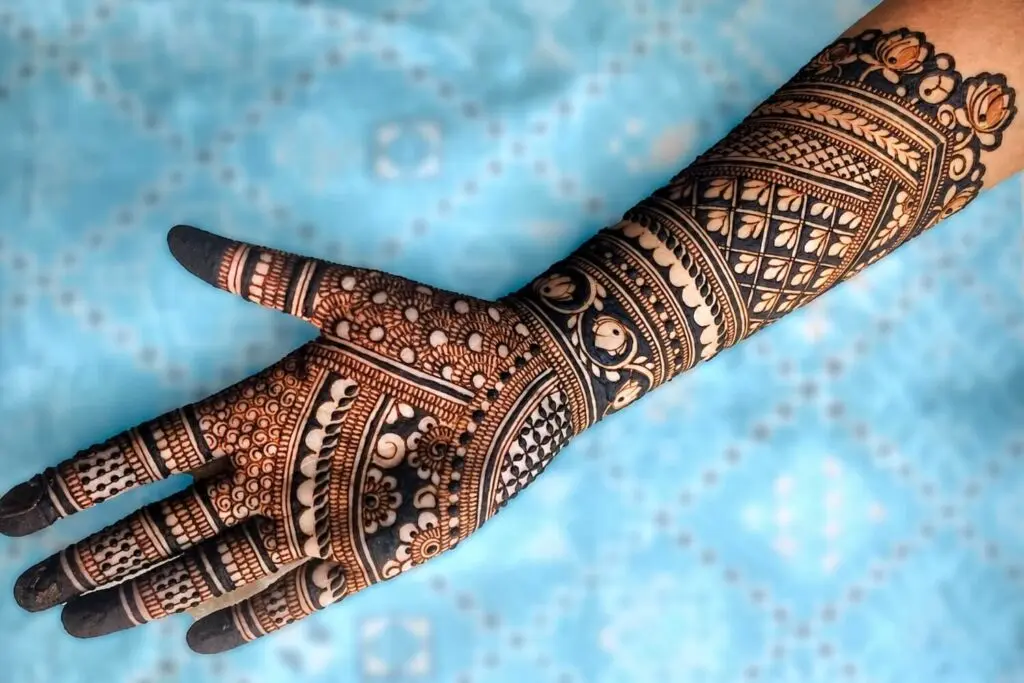
Moroccan henna is an ancient art of beauty, joy and good luck. Delicate patterns of flowers, lines and dots are painted on the hands and feet with a natural paste made from the henna plant. In Morocco, henna is part of weddings, Eid, births and celebrations, and many travelers love to try it in the souks of Marrakech.
In this guide, our local team explains the meaning of Moroccan henna, the traditions, the different styles, how to choose a safe henna artist and how to care for your design.
Moroccan Henna at a Glance
| Fact | Details |
|---|---|
| Local name | Lhenna |
| Made from | Dried, crushed leaves of the henna plant |
| Color | Orange to deep red-brown |
| Lasts | About 1 to 3 weeks |
| Main occasions | Weddings, Eid, births, celebrations |
| Artist | Nekkacha (henna artist) |
What Is Moroccan Henna?
Henna is a plant (Lawsonia inermis) that grows in warm, dry places. Its leaves are dried and ground into a fine green powder. Mixed with water, lemon juice and sometimes sugar or clove, it becomes a paste. When applied to the skin and left for a few hours, it leaves a natural orange-red stain that becomes darker over 1–2 days.
In Morocco, henna is grown in areas like the oases of the south, and the powder is sold in every spice market.
The Meaning of Henna in Morocco
For Moroccans, henna is linked to baraka, a blessing that brings luck, happiness and protection. It is used at important moments in life to celebrate and protect. Some patterns also have symbolic meanings, like flowers for fertility and joy, or the hand of Fatima (khamsa) for protection.
Henna at Moroccan Weddings
The most famous use of Moroccan henna is the henna night before a wedding. The bride, wearing a green or traditional dress, sits while a nekkacha paints detailed designs on her hands and feet. Women of the family sing, dance and share sweets and tea. Guests also get small henna designs for luck. Read our guide to the Moroccan wedding.
Other Occasions for Henna
- Eid celebrations: girls and women decorate their hands.
- Ashura: a traditional time for henna for children.
- Births and baptism (sbouaa): the mother receives henna.
- Hair care: many women use henna as a natural hair color and conditioner.
Moroccan Henna Styles
Moroccan henna has its own style, different from Indian or Gulf henna:
- Geometric patterns: lines, triangles and diamonds inspired by Amazigh art, carpets and tattoos.
- Fes style: fine, detailed and elegant, often covering the fingers and palms.
- Marrakech style: bold patterns with flowers and leaves.
- Sahrawi style: full, dark coverage of the hands and feet.
- Modern mixes: lighter designs, small bracelets or ring patterns.
Getting Henna in Marrakech
In Jemaa el-Fna square, you will meet many women offering henna. Some are excellent artists, but be careful: some use «black henna» or start drawing on your hand without asking. Here is how to enjoy it safely:
- Choose a salon or cooperative rather than a street seller who grabs your hand.
- Ask for natural henna (red-brown), never «black henna».
- Look at the paste: natural henna is green-brown and smells of plants.
- Agree on the design and the price before starting.
- Ask your riad for a trusted nekkacha who can come to you.
Read more about Jemaa el-Fna and our safety tips in is Marrakech safe to travel.
Why to Avoid Black Henna
«Black henna» is not real henna. It often contains a chemical dye called PPD that can cause strong skin reactions, burns and lasting allergies. Health agencies warn travelers about it, such as the US FDA. Real Moroccan henna is never black when fresh; it stains orange first and turns red-brown.
How to Care for Your Henna
- Leave the paste on for at least 2–4 hours (overnight is best for a dark color).
- Do not touch water while the paste is drying.
- Some artists dab lemon and sugar on the dry paste to keep it on the skin.
- Scrape off the dry paste; do not wash it off.
- Avoid water for the first 12 hours.
- Rub a little olive oil or argan oil on the design to protect it.
- The color darkens over 24–48 hours and fades in 1–3 weeks.
Learn more about argan oil in Morocco.
Henna in the Desert
In the south and the Sahara, henna is very much alive. In villages near Merzouga, Zagora and M’hamid, women may offer henna to visitors. On a desert tour, you can ask your guide to arrange a henna session with a local family, a lovely cultural memory. See our Marrakech desert tours.
Buying Henna Powder
You can buy pure henna powder in the spice markets of Marrakech, Fes and Rissani. It is cheap and makes a natural souvenir for hair or skin. Check that it is green, smells fresh and has no added chemicals.
Frequently Asked Questions
What is Moroccan henna?
A natural paste from the henna plant used to paint temporary designs on hands and feet.
How long does henna last?
About 1 to 3 weeks, depending on skin, care and the area of the body.
Is henna safe?
Natural henna is safe for most people. Avoid «black henna», which can contain harmful chemicals.
Where can I get henna in Marrakech?
In henna salons, cooperatives or through your riad; be careful with street sellers.
Why do Moroccan brides wear henna?
For beauty, luck and protection on the most important day of their lives.
Final Thoughts on Moroccan Henna
Moroccan henna is a beautiful and meaningful tradition. Choose natural henna, a trusted artist and a design you love, and you will carry a little piece of Morocco on your hands. Want to add a henna experience to your trip? Contact our local team for a free quote.
Explore our Morocco trips:
Tours from Marrakech: Cross the High Atlas to Ait Ben Haddou, the Todra Gorge and the dunes of Erg Chebbi.
Tours from Fes: Ride through the cedar forests of the Middle Atlas to the Sahara.
Tours from Casablanca: Discover the imperial cities, the mountains and the desert in one trip.
Contact us
Your Local Experts
Ibrahim and our Moroccan team plan your trip with care. Whether you land in Marrakech, Fes, Casablanca, Tangier, Rabat, Agadir or Ouarzazate, we pick you up and shape each day around what you love.
Plan Your Trip
Click any destination to see more: