- tomarrakechdeserttours@gmail.com
- +212702431727

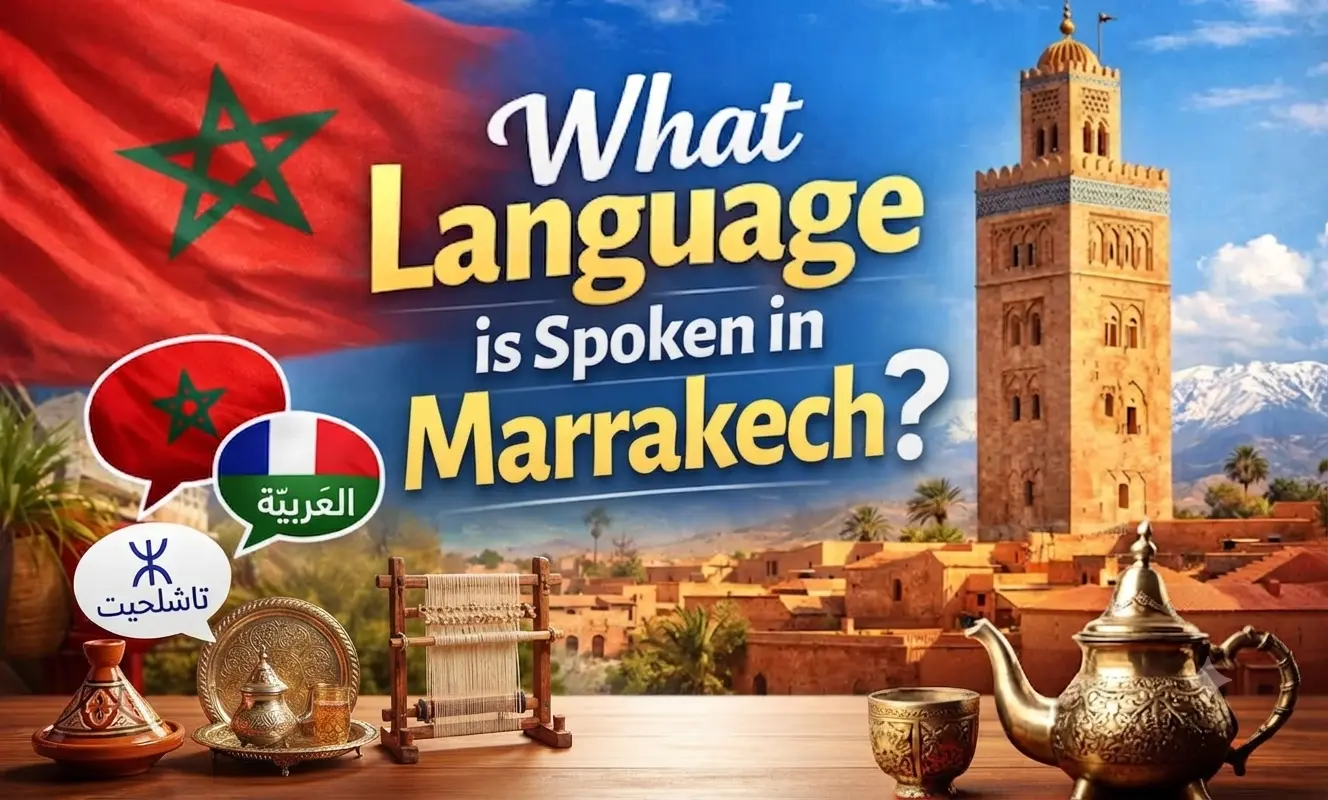
If you are dreaming of a trip to the vibrant Red City, you are likely preparing for a cultural adventure unlike any other. As you research the local customs and traditions, you may find yourself asking: what language is spoken in Marrakech? Understanding the local way of communicating is a wonderful way to connect more deeply with the people, the markets, and the beautiful history of this Moroccan destination.
The linguistic landscape of Marrakech is as colorful and diverse as its bustling souks. Because Morocco has such a rich history of influence from various cultures, you will hear a beautiful blend of languages spoken in the streets, shops, and restaurants. Whether you are bargaining for a rug, asking for directions to a historic site, or simply enjoying a glass of mint tea with residents, knowing what to expect can make your experience much more relaxed and rewarding.
In this guide, we will explore the main languages you will encounter in Marrakech and provide you with some helpful tips on how to interact with the locals during your stay.
To understand what language is spoken in marrakech, it is important to recognize that the city is a multilingual environment. You will find that most residents, especially those working in tourism and trade, are naturally gifted at switching between languages to help visitors feel comfortable.
Moroccan Darija: This is the primary daily language of the people. It is a unique Moroccan dialect of Arabic that is spoken by locals in their homes, in the streets, and while socializing. While it is quite different from Modern Standard Arabic, hearing it adds a wonderful, authentic rhythm to your journey through the Medina.
Modern Standard Arabic: You will see this language written on official signs, government documents, and in newspapers. While it is the formal language of the country, it is used more for reading and writing than for casual, everyday conversation.
French: Due to historical influences, French is widely spoken and understood across the city. It is used extensively in business, education, and by many shopkeepers and hoteliers, making it a very useful bridge language if you have even a basic command of it.
As you continue to explore what language is spoken in marrakech, you might be concerned about the language barrier. However, if you are a traveler, you will find that the city is incredibly welcoming and well-prepared to communicate with visitors from all over the world.
The Rise of English: Over the past decade, English has become increasingly common, particularly within the tourism sector. You will find that many younger residents, as well as staff in hotels, cafes, and popular tourist sites, speak very good English.
Tourism-Driven Hospitality: Because the city thrives on welcoming guests, shopkeepers and tour operators are often multilingual. Many are experts at understanding and speaking several languages, ensuring that you can easily navigate markets, book excursions, and ask for information.
A Bridge of Gestures: Even if you do not speak Darija or French, communication in Marrakech is often supported by friendly body language and genuine, warm hospitality. Do not be surprised if a shopkeeper strikes up a conversation in a mix of three different languages just to make sure you have everything you need!
While Arabic and French are the languages you will encounter most frequently in the city, no exploration of what language is spoken in Marrakech is complete without acknowledging the ancient roots of the Amazigh people. As the indigenous language of North Africa, Tamazight is a vital pillar of Moroccan identity and heritage.
Deep Cultural Roots: Tamazight is a beautiful, ancient language that connects Morocco to its history long before the arrival of other major world languages.
A Connection to the Mountains: You will often hear this melodic, rhythmic language spoken by residents who have roots in the Atlas Mountains or rural desert regions.
The Beauty of Tifinagh: Keep an eye out for the Tifinagh script, the unique, geometric alphabet used to write Tamazight. You may see it on official signs, monuments, or traditional crafts, representing the enduring spirit of the culture.
A Sign of Respect: While you are not expected to speak it, simply knowing that it is the native language of many Moroccans shows a profound level of cultural appreciation that the local community truly values.
Learning just a few words of the local language can transform your trip and turn a simple interaction into a warm memory. When people ask what language is spoken in Marrakech, they are often delighted to discover that the locals truly appreciate it when visitors make an effort to speak a little bit of Moroccan Darija.
“Salam Alaikoum”: This is the standard, respectful way to say “hello” or “peace be upon you.” It is the perfect way to greet shopkeepers or locals you meet throughout the day.
“Shukran”: This simply means “thank you.” You will use this constantly, whether you are buying a souvenir, ordering food, or finishing a conversation.
“Afak”: This is the word for “please.” Using this small word shows great respect and is always welcomed during your interactions.
“Labas?”: This is a very common way to ask “How are you?” or “Are you okay?” It is a friendly, casual way to check in with the people you meet.
Using these simple phrases with a smile is the best way to open doors and build genuine connections while you travel. You do not need to be fluent to be understood; the effort itself shows that you respect the culture and the people of the city.
When you find yourself deep in the heart of the markets, knowing what language is spoken in Marrakech can help you feel much more confident. The souks are fast-paced, exciting, and full of energy, and while language barriers can happen, they are rarely an issue for a traveler who knows how to communicate with patience and respect.
The Power of Numbers: Many shopkeepers will have a small calculator handy. If you are negotiating a price for a beautiful item, using a calculator is a universal language. You can simply type in your offer, show it to the seller, and keep the interaction smooth and fun.
Keep it Friendly: A friendly attitude is your best tool. Even if you are not fluent in Darija or French, a smile and a polite tone go a long way. The merchants are professionals at their craft and are accustomed to welcoming visitors from all corners of the globe.
Observe and Listen: If you are unsure about the language, take a moment to observe how the locals interact. Notice how they use hand gestures, polite nods, and the phrases we covered earlier. Mimicking this respectful approach will make your time in the markets much more enjoyable and successful.
When you fully understand what is the language spoken in Marrakech, you realize that communication here is an art form that goes far beyond spoken words. In a city as rich in history and hospitality as this one, much of the interaction between locals and travelers happens through non-verbal cues. Understanding these nuances will help you navigate your journey with much greater ease and grace.
The Importance of Eye Contact and Gestures: In local culture, direct but respectful eye contact is a sign of honesty and sincerity. When combined with a polite nod or a hand placed over your heart after receiving something, it conveys deep appreciation and respect.
Patience as a Universal Language: The pace of life in the city is very different from the fast-paced West. Taking the time to drink a glass of tea, engaging in small talk, and showing patience during a transaction are all considered forms of respectful communication. Rushing a local merchant is often seen as impolite, while taking your time is viewed as a sign of respect for their business.
Cultural Sensitivity: Always be mindful of your surroundings. In public spaces, maintaining a calm and polite demeanor is highly valued. Whether you are interacting with your tour operators or a local artisan, a soft-spoken and appreciative approach will ensure that you are met with the same warmth and kindness in return.


While the question of what language is spoken in Marrakech often centers on Arabic, French, and English, the city’s true language is one of warmth, patience, and hospitality. You do not need to be a linguist to have a successful trip; you simply need an open mind and a respectful attitude. By embracing local traditions and learning a few phrases, you transform your journey into a deeply meaningful cultural exchange.
Communication here often happens beyond words. Whether you are navigating the busy souks or enjoying a quiet glass of mint tea, your smile and patience are universal tools that bridge any gap. Residents truly value visitors who take a genuine interest in their unique way of life, turning every interaction into a chance to connect.
We hope this guide has given you the confidence to navigate the city with ease. Now that you know what language is spoken in Marrakech, you are fully prepared to immerse yourself in its vibrant life. Enjoy the beautiful sounds of the local dialect and prepare for an authentic Moroccan adventure that you will remember for a lifetime.
To Marrakech Desert Tours is a professional team dedicated to showing you the very best of the Moroccan desert. We offer high-quality tours with expertly designed programs to give you an unforgettable experience.
ToMarrakechDesertTours.com is a group of local experts who love sharing the authentic beauty of Morocco.
Our services are tailored for everyone, offering amazing adventures that fit any budget perfectly.
⇢ Booking directly with a local team saves you time, money, and stress, and makes sure every part of your trip is well organized.
⇢ Our guides and drivers are passionate about Morocco and love sharing its culture, history, and landscapes with our guests.
⇢ Every tour is private and flexible, so we can adapt the route, the pace, and the activities to your wishes.
© 2026 TO MARRAKECH DESERT TOURS. ALL RIGHTS RESERVED.