- tomarrakechdeserttours@gmail.com
- +212702431727

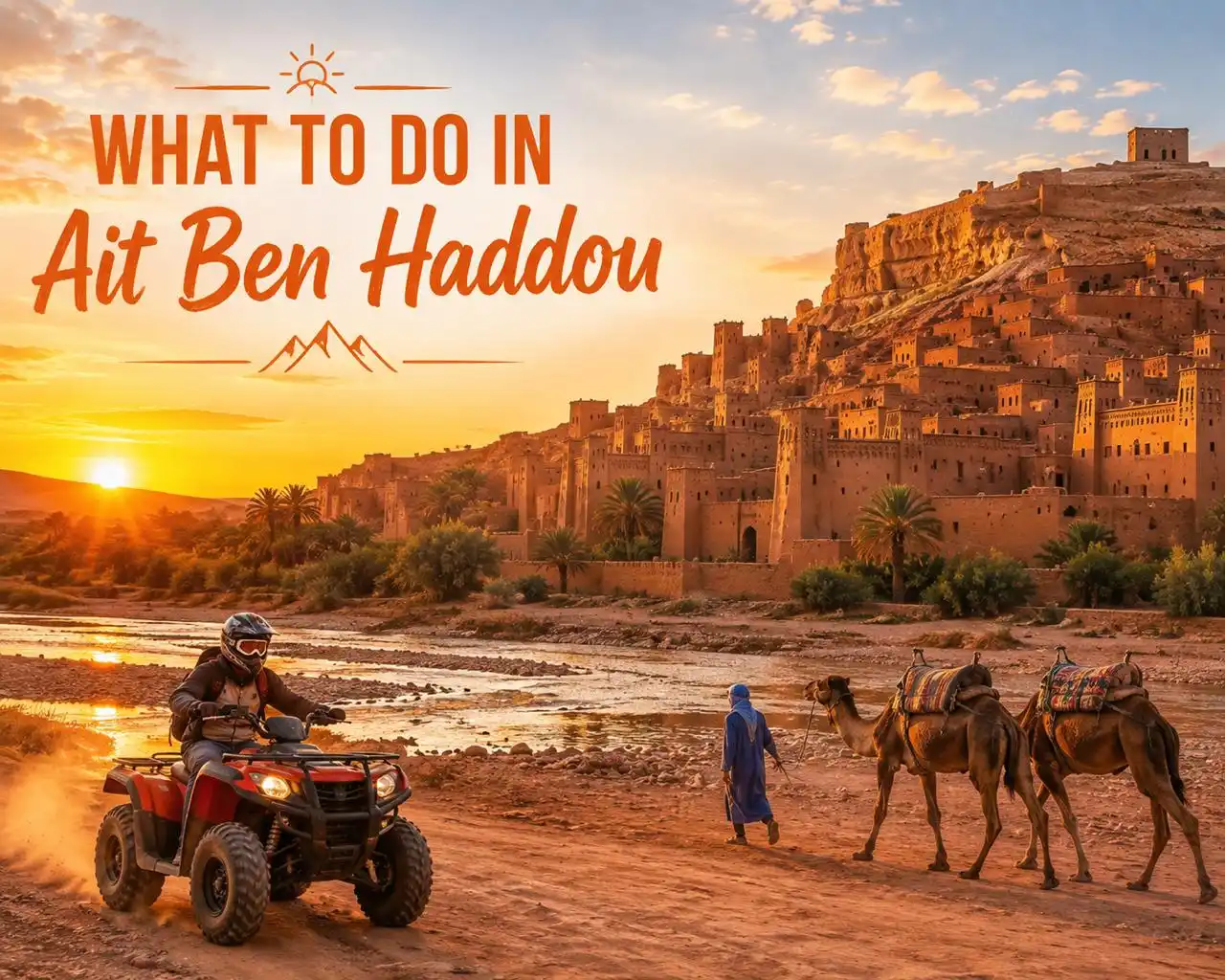
Visiting Ait Ben Haddou feels like stepping into a living time capsule. Nestled in the Ounila Valley along ancient desert trading corridors, this UNESCO World Heritage fortified village (ksar) offers travelers far more than just a quick photo opportunity. Its towering earthen walls, maze of clay alleys, and dramatic mountain backdrops create an unforgettable atmosphere for explorers, history lovers, and photographers alike.
While many day-trippers spend only a couple of hours walking through the main gates, staying longer reveals a rich tapestry of local Amazigh (Berber) culture and desert landscapes. From climbing ancient watchtowers to sipping mint tea with local families, the activities here offer a genuine connection to traditional southern Moroccan life.
Whether you are spending a few hours during a desert tour or staying overnight in a traditional guest house, this ultimate guide highlights the absolute best things to see and do in and around Ait Ben Haddou.
The absolute highlight of visiting Ait Ben Haddou is stepping inside the ancient ksar (fortified earthen village) and wandering through its labyrinth of narrow, winding pathways. Built entirely from mud brick, straw, and clay, these structures offer an incredible look into traditional Amazigh (Berber) architecture.
Passing Through the Fortified Gates: Enter the ancient village through the imposing arched clay gateways that once protected residents and wealthy merchants from desert invaders.
Navigating the Maze of Alleys: Wander through shaded dirt pathways, covered passageways (sikhs), and steep stone steps designed to keep the village cool during hot summer days.
Visiting Traditional Earthen Houses (Kasbahs): Observe the multi-story clay homes built with corner towers and decorative geometric carvings carved into the upper earthen walls.
Exploring the Public Spaces: Discover the traditional communal areas inside the walls, including the central assembly square, the mosque area, and the ancient grain storage spaces.
Meeting Local Residents: A handful of local families still reside inside the old village, offering visitors a glimpse into authentic daily life in an earthen fortress.
Climbing to the high summit above the village leads to the Agadir, the fortified communal granary that crown the entire ksar. Built at the peak to safeguard the community’s grain, salt, and valuables during times of siege, this ancient structure offers the absolute best vantage point in the region.
The Route: The trail winds upward from the lower village alleys, following stone pathways and dirt steps that climb around the rear of the earthen towers.
Duration: The walk takes about 15 to 20 minutes from the river level at a steady, leisurely pace.
Accessibility: While the incline is manageable for most fitness levels, wear sturdy shoes as the gravel paths can be slippery, especially on the way down.
Once you reach the stone ruins of the granary at the top, you are rewarded with sweeping views across the entire region:
Ounila Valley & Riverbed: Look down at the lush green palm groves tracing the curves of the Asif Ounila riverbed contrasted against the dry, red earth.
Atlas Mountains Backdrop: To the north, the snow-capped peaks of the High Atlas Mountains frame the desert horizon.
The Mudbrick Village Below: Enjoy a bird’s-eye view of the layered clay roofs, watchtowers, and inner courtyards.
The best time to make the climb is in the late afternoon, about an hour before sunset:
Golden Light: As the sun dips lower, the soft light casts a deep red and orange glow over the clay buildings, making it a dream setting for travel photography.
Cooler Evening Breeze: Timing your hike for late afternoon allows you to avoid the intense midday heat and enjoy the refreshing evening desert breeze at the summit.
Beyond its famous cinematic vistas, Ait Ben Haddou is a vibrant hub of Amazigh heritage and traditional craftsmanship. Visiting local workshops inside the earthen fortress gives you a rare look into centuries-old artistic techniques that cannot be found anywhere else in Morocco.
One of the most unique experiences inside the ksar is visiting local studio painters who practice a traditional, fire-based art technique:
Natural Pigments: Artists create intricate sketches using only organic, local ingredients, green tea, saffron, indigo, and lemon juice diluted in water.
The Magic Reveal: When first painted, the canvas appears nearly blank. The artist then passes the paper carefully over an open kerosene flame. As heat reacts with the natural sugars and juices, rich brown, golden, and indigo tones instantly appear on the paper.
The region surrounding Ouarzazate and the nearby Taznakht valley is world-renowned for traditional handwoven Amazigh rugs. Visiting the local carpet cooperatives inside and near the village offers an authentic, transparent shopping experience:
Hand-Loomed Craftsmanship: Watch local women card, spin, and dye local sheep wool using plant dyes like pomegranate skin, indigo, and saffron.
Meaningful Tribal Motifs: Each rug tells a unique story, patterns represent family heritage, natural elements, and desert symbolism woven directly onto wooden looms.
Fair Trade & Direct Impact: Purchasing a carpet directly from a women’s cooperative cuts out middleman fees, ensuring the women weavers receive fair compensation for their hard work and artistic legacy.

Ait Ben Haddou is world-famous as a premier open-air movie set. Hollywood directors have flocked to this valley for decades to capture its dramatic earthen walls, pre-Saharan lighting, and timeless desert scenery. Exploring the village allows movie fans to walk directly through iconic sets from cinema history.
The Arena Location: As you walk along the lower flats near the riverbed outside the main gates, you are standing on the ground where Proximo’s gladiator school was staged and where Maximus fought his first battles.
Return of Ridley Scott: The village returned to the silver screen for Gladiator II (2024), bringing massive Hollywood production crews back to southern Morocco.
Fantasy television fans will instantly recognize the earthen fortress from Season 3 of HBO’s Game of Thrones:
The City Gates: The main lower entrance to the ksar served as the massive gateway to Yunkai (Slaver’s Bay), where Daenerys Targaryen laid siege to the city and was cheered on by liberated crowds in the iconic season finale.
The Hilltop Crowning: CGI elements were blended with the real hilltop agadir to give Yunkai its fictional fantasy skyline.
Wandering deeper into the winding pathways reveals spots featured in numerous classical cinematic masterpieces:
Lawrence of Arabia (1962): One of the first major international productions shot here, putting Ait Ben Haddou on the global movie map.
The Mummy (1999): The ancient alleyways served as key desert sets during archaeological adventures.
Kingdom of Heaven (2005): Ridley Scott utilized the earthen architecture to represent medieval Middle Eastern cities during the Crusades.
Prince of Persia: The Sands of Time (2010): The high towers and clay walls doubled as ancient Persian desert strongholds.
The journey into the ancient ksar starts with crossing the riverbed that separates the historic village from the modern town:
The Pedestrian Bridge: A modern, paved bridge allows travelers to walk across safely year-round, offering great elevated photos of the fortress water reflection.
Traditional Stepping Stones: During dry seasons when water levels are low, step across the natural stones and sandbanks in the riverbed just as travelers and caravans have done for centuries.
Experience traditional desert travel by taking a short camel ride around the base of the fortress:
Scenic Trails: Caravan guides lead camels along the sandy palm groves bordering the riverbed, giving you classic angles for photos with the mud towers in the background.
Short Tours: Rides typically range from 15 to 45 minutes, making it an easy add-on activity for families and first-time visitors.
For a dose of adrenaline, rent an ATV quad bike or buggy to explore the rugged desert terrain:
Off-Road Trails: Ride across dry riverbeds, rocky desert trails, and high ridges overlooking the valley.
Panoramic Stopovers: Guided quad tours take you to elevated hilltops for sweeping desert views away from the main tourist paths.
If you have extra time, follow the road north through the lush Ounila Valley toward Telouet:
Stunning Contrast: Deep green terraced olive groves contrast sharply against dramatic red clay canyons and traditional mud villages along the valley route.
Kasbah Telouet: Visit the historic, crumbling palace of the former Pasha Glaoui located higher up in the valley for impressive interior tilework and stucco carvings.

Ait Ben Haddou is far more than just a historical monument; it is an immersive open-air museum where centuries of desert history, Amazigh culture, and global cinema converge. Whether you are wandering through ancient mudbrick passageways, shopping for saffron art, or retracing legendary movie sets, knowing what to do in Ait Ben Haddou ensures you capture the very best this desert sanctuary has to offer.
From the quiet energy of the riverbed to the sweeping golden-hour views atop the hilltop granary, every corner of this UNESCO World Heritage Site tells a story. Taking the time to explore beyond the main gates reveals a deeper, more authentic side of southern Morocco that short day-trips often miss.
Combining outdoor adventures, rich local craftsmanship, and unforgettable panoramic vistas makes your visit truly complete. Following a thoughtful Ait Ben Haddou itinerary allows you to balance active exploration with relaxing moments, like sipping fresh mint tea on a rooftop terrace as the red clay towers glow in the evening sun.
As you prepare for your trip to this historic crossroads, bring comfortable walking shoes, respect local traditions, and give yourself plenty of time to slow down. Ait Ben Haddou promises an extraordinary journey into Morocco’s past that will remain a highlight of your travels for years to come.
To Marrakech Desert Tours is a professional team dedicated to showing you the very best of the Moroccan desert. We offer high-quality tours with expertly designed programs to give you an unforgettable experience.
ToMarrakechDesertTours.com is a group of local experts who love sharing the authentic beauty of Morocco.
Our services are tailored for everyone, offering amazing adventures that fit any budget perfectly.
⇢ Booking directly with a local team saves you time, money, and stress, and makes sure every part of your trip is well organized.
⇢ Our guides and drivers are passionate about Morocco and love sharing its culture, history, and landscapes with our guests.
⇢ Every tour is private and flexible, so we can adapt the route, the pace, and the activities to your wishes.
© 2026 TO MARRAKECH DESERT TOURS. ALL RIGHTS RESERVED.