
Travel to Morocco from Colombia: The Complete Guide for Colombian Travelers
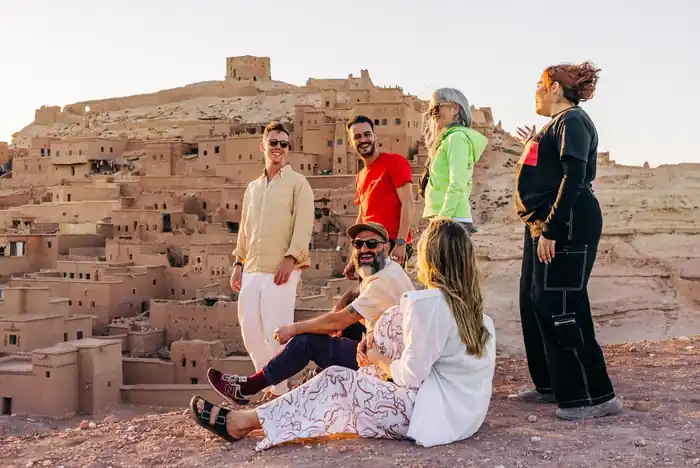
More and more Colombians dream of Morocco: the colorful souks of Marrakech, the blue streets of Chefchaouen, the golden dunes of the Sahara and the famous Moroccan hospitality. The good news is that it has never been easier to travel to Morocco from Colombia. Colombian citizens do not need a visa for short stays, and there are many easy flight connections through Europe.
In this guide, our local team in Morocco explains everything you need to know when you plan to travel to Morocco from Colombia: entry rules, the best flight routes, which airport to choose, money, time difference, culture, the best season to travel and sample itineraries. Whether you come from Bogotá, Medellín, Cali or Cartagena, this page will help you plan a smooth and unforgettable journey.
To travel to Morocco from Colombia, you only need a valid passport: Colombians can visit Morocco without a visa for up to 90 days. There are no direct flights, so most travelers fly from Bogotá or Medellín to Madrid (or another European hub) and then take a short flight to Marrakech, Casablanca, Fes or Tangier. Bring euros or US dollars, because Colombian pesos are not exchanged in Morocco.
Table of Contents: Travel to Morocco from Colombia
Do Colombians Need a Visa to Travel to Morocco?
No. Since 2021, Morocco and Colombia have an agreement that removes the visa for each other’s citizens for short stays. With a Colombian passport you can enter Morocco as a tourist and stay up to 90 days without applying for anything in advance.
At the border, the police officer may ask for a few simple things, so keep them ready:
- A Colombian passport valid for your whole stay (we recommend at least 6 months of validity)
- Your return or onward flight ticket
- The address of your first hotel or riad, or your tour confirmation
- Proof that you can pay for your trip (a bank card is usually enough)
Entry rules can change, so check the latest information with the Embassy of Morocco in Bogotá before you book. You can also read the general visa policy of Morocco.
Important for your connection: most routes to Morocco pass through Europe. If you only change planes inside the airport, you usually stay in the international area. If you leave the airport or stop over in Spain or another Schengen country, check the current European entry rules (including the new ETIAS system) for Colombian passports before you fly.
How to Get from Colombia to Morocco: Flight Routes
At the moment there are no direct flights between Colombia and Morocco, but connections are easy. The whole journey usually takes between 15 and 20 hours, depending on the route and the waiting time between flights. These are the most popular options:
| Route | Main airlines | Good to know |
|---|---|---|
| Via Madrid (most popular) | Avianca, Iberia, Air Europa + Royal Air Maroc, Iberia, Ryanair, Air Arabia | Direct flights to Madrid from Bogotá, Medellín and Cali, then 1 to 2 hours to Marrakech, Casablanca, Fes or Tangier. |
| Via Barcelona | Avianca + Vueling, Ryanair | Good option for Marrakech, Tangier and Fes. |
| Via Paris | Air France + Royal Air Maroc, Transavia | Many daily flights from Paris to every big Moroccan city. |
| Via Lisbon | TAP Air Portugal | Short hop from Lisbon to Marrakech or Casablanca. |
| Via Istanbul | Turkish Airlines | Long, but one airline for the whole trip and good baggage rules. |
Our tip: book one ticket for the whole journey when you can. If your first flight is late, the airline must take care of your connection. If you book two separate tickets, leave at least 3 to 4 hours between flights, especially in Madrid.
Adventurous travelers can also fly to southern Spain and cross the Strait of Gibraltar by ferry from Tarifa or Algeciras to Tangier. It is a beautiful way to arrive in Africa, and from Tangier you can start one of our tours from Tangier.
Which Moroccan Airport Is Best for Colombian Travelers?
When you travel to Morocco from Colombia, the right arrival airport depends on the route you want to follow:
Marrakech (RAK)
The best choice for most visitors. It is the gateway to the Atlas Mountains and the Sahara, and the starting point of our most popular desert tours.
Casablanca (CMN)
The main international airport and the hub of Royal Air Maroc. Ideal for a big loop through the imperial cities, Chefchaouen and the desert.
Fes (FEZ)
Perfect if you want to start with the old medina of Fes and reach the Merzouga dunes the fastest way.
Tangier (TNG)
Very close to Spain, by plane or by ferry. Great for northern Morocco: Chefchaouen, Tetouan and Asilah.
A smart idea is an “open-jaw” ticket: arrive in one city and leave from another, for example arrive in Casablanca and fly home from Marrakech. This saves you a long drive back.
Money: Pesos, Euros and Dollars
This is one of the most important things to know when you travel to Morocco from Colombia: the Colombian peso is not exchanged in Morocco. The Moroccan dirham (MAD) is a closed currency, so you can only get it once you arrive.
- Bring euros or US dollars in clean notes. They are easy to change at the airport, in banks and in exchange offices.
- Colombian Visa and Mastercard bank cards work in most ATMs in Moroccan cities. Tell your bank about your trip before you leave.
- Hotels, big restaurants and shops accept cards, but the souks, small cafes, taxis and villages need cash.
- Keep some small notes and coins for tips, which are part of the culture.
Time Difference, Language and Practical Tips
Morocco is 6 hours ahead
Colombia uses GMT-5 and Morocco normally uses GMT+1, so when it is 8:00 in Bogotá, it is 14:00 in Marrakech. During Ramadan, Morocco moves its clock back one hour, so the difference becomes 5 hours.
You can use your Spanish
People speak Moroccan Arabic, Amazigh (Berber) and French, but Spanish is common in the north, in cities like Tangier, Tetouan and Chefchaouen, because of the history with Spain. In tourist areas, many people also understand some Spanish.
Bring a plug adapter
Colombia uses flat-pin plugs (types A and B) and 110 volts. Morocco uses round-pin European plugs (types C and E) and 220 volts. Most phone and laptop chargers work with both voltages, but check hair dryers and other devices.
Get a local SIM or eSIM
A Maroc Telecom, Orange or inwi SIM card is cheap and easy to buy at the airport with your passport. It is useful for maps, WhatsApp and calls with your driver.
Morocco has real seasons
In Colombia the weather depends on altitude, not on the month. In Morocco, summer is very hot, and winter nights are cold in the desert and the mountains. Always bring a warm layer.
Travel insurance and health
No special vaccine is normally required to enter Morocco from Colombia, but rules can change, so ask your doctor or a travel clinic before you go. Good travel insurance is always a smart choice.
Morocco and Colombia: What Will Feel Familiar and What Is Different
Colombian travelers often tell us they feel at home in Morocco very quickly. Both countries share a warm, family-centered culture and people who love to welcome visitors. Still, there are some differences worth knowing:
Warm hospitality
Like in Colombia, guests are treated like family. Instead of a tinto, you will be offered sweet mint tea in shops, homes and desert camps.
From the Andes to the Atlas
If you love the Colombian mountains, you will enjoy the High Atlas, with Berber villages, green valleys and Mount Toubkal (4,167 m).
Food full of flavor
Moroccan cuisine is not spicy-hot, but it is rich in spices. Try tagine, couscous on Friday, harira soup and fresh orange juice.
A Muslim country
Morocco is a Muslim country. Dress modestly in medinas and villages, ask before taking photos of people, and know that most mosques are closed to non-Muslims, except the Hassan II Mosque in Casablanca.
Bargaining is normal
In the souks, prices are not fixed. Smile, stay friendly and negotiate, just like in some Colombian markets, but with more patience.
For more useful advice, read our guide with the most important facts to know before traveling to Morocco.
Best Morocco Itineraries for Colombian Travelers
When you travel to Morocco from Colombia, the flight is long, so we recommend at least 8 to 12 days in Morocco. This gives you time to rest after the trip and to see the cities, the mountains and the Sahara without rushing. All our tours are private, with an experienced local driver, and can be fully customized. Ask us if you prefer a Spanish-speaking driver.
- Short trip from Marrakech: the 3 days desert tour from Marrakech takes you over the Atlas to the Merzouga dunes, with a night in a desert camp.
- One week: our 7 days Morocco tour from Marrakech to Casablanca combines the desert, the gorges and the imperial cities.
- Arriving via Madrid to the north: the 5 days tour from Tangier to Marrakech visits Chefchaouen, Fes and the Sahara.
- Arriving in Casablanca: the 10 days tour from Casablanca is a complete loop of the country.
- The complete experience: the 12 days Morocco tour from Marrakech is perfect if you want to see almost everything.
Send us your dates and your wishes, and we will prepare a personal itinerary and a free quote. See also all our Morocco itineraries.
Best Time to Travel to Morocco from Colombia
The best seasons are spring (March to May) and autumn (September to November), with warm days and cool nights. This fits well with Semana Santa, a popular holiday time for Colombian families.
June to August is very hot in Marrakech and the desert, but pleasant on the coast. December and January are sunny and quiet, with cold nights in the Sahara, and many travelers come to celebrate the new year in the desert. Read more in our guide to the best time to go to Morocco and see our New Year’s Eve in Morocco program.
Packing List for Your Trip
- Your passport (valid at least 6 months) and printed copies of your flight and hotel bookings
- Euros or US dollars in cash, plus a bank card
- A plug adapter for types C and E
- Light, loose clothes that cover shoulders and knees
- A warm jacket for desert nights and the mountains
- Comfortable walking shoes for the medinas
- Sunglasses, a hat, sunscreen and a scarf against sun and dust
- A small bag for one night in a desert camp
Frequently Asked Questions
Do Colombians need a visa for Morocco?
No. Colombian passport holders can visit Morocco as tourists for up to 90 days without a visa. Check the latest rules with the Moroccan embassy before you travel.
Is there a direct flight from Colombia to Morocco?
Not at the moment. To travel to Morocco from Colombia, most travelers connect in Madrid, Barcelona, Paris, Lisbon or Istanbul. The total trip usually takes 15 to 20 hours.
How long is the trip from Bogotá to Marrakech?
With one good connection in Madrid, about 15 to 17 hours in total, including the stop.
Can I pay with Colombian pesos in Morocco?
No. Bring euros or US dollars to exchange, or take out dirhams from an ATM with your Colombian card.
Is Morocco safe for Colombian tourists?
Yes. Morocco is one of the safest and most visited countries in Africa. Normal care with your bag and phone in crowded places is enough.
Do people speak Spanish in Morocco?
Yes, especially in the north and in tourist areas. Ask us if you would like a Spanish-speaking driver or guide for your tour.
Conclusion
To travel to Morocco from Colombia is easier than many people think: no visa, good flight connections through Europe and a country that welcomes Latin American visitors with open arms. Prepare your passport, bring euros or dollars, pack a warm layer for the desert and get ready for an adventure full of colors, flavors and stories.
Our local team can organize everything from the moment you land: airport pick-up, private transport, riads, desert camps and friendly local drivers. Contact us today for your free quote and start planning your trip from Colombia to Morocco.
contact us
Click any destination below to preview the complete itinerary
- 2 Days Desert Tour from Marrakech to Merzouga
- 2 Days Desert Tour from Marrakech to Fes
- 3 Days Desert Tour from Marrakech to Merzouga
- 3 Days Desert Tour from Marrakech to Fes
- 4 Days Desert Tour from Marrakech to Merzouga
- 5 Days Desert Tour from Marrakech to Merzouga
- 5 Days Sahara Desert Tour from Marrakech
- 6 Days Desert Tour from Marrakech to Csablanca
- 7 Days Desert Tour from Marrakech to Casablanca
- 8 Days Morocco Tour From Marrakech
- 10 Days Morocco Tour From Marrakech
- 12 Days Morocco Tour From Marrakech